What happened
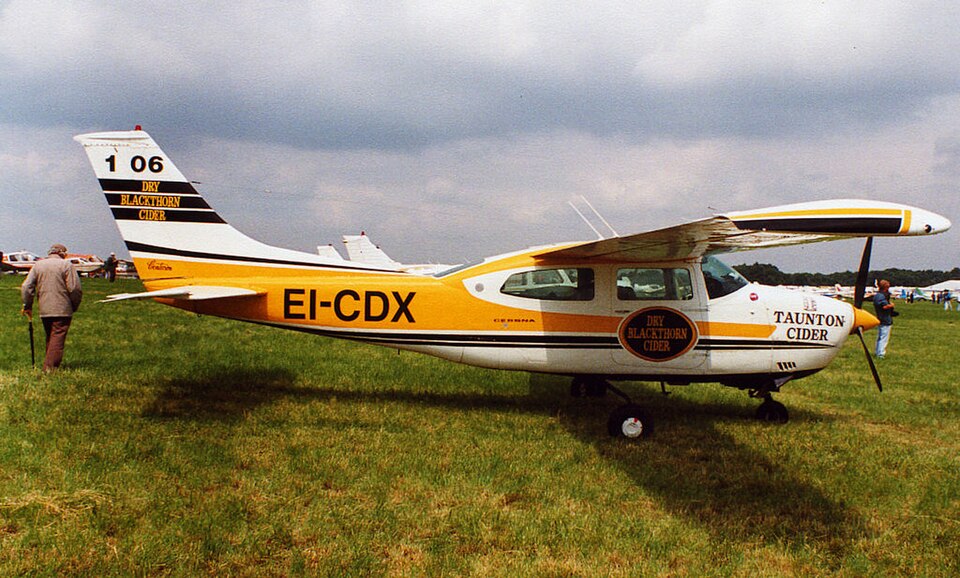
On September 21, 2009, at approximately 13:40 local time, a private Cessna 210 K, registration EI-CDX, was performing its third local flight of the day at the Ocaña Aerodrome in Toledo. The aircraft was operated by a private owner and carried a pilot and two passengers.
Following two previous local flights from runway 11, the pilot decided to change the departure runway to 29 due to shifting wind conditions. During the takeoff roll on runway 29, the pilot applied power to 25” of manifold pressure and 2,500 rpm, utilizing 10° of flaps. Shortly after the aircraft became airborne, the pilot applied the brakes and initiated the landing gear retraction sequence.
Immediately following the gear retraction, the aircraft began to lose altitude. The pilot heard the stall warning and attempted to relieve back pressure on the elevator to lower the nose and regain airspeed; however, this maneuver was insufficient. The aircraft continued to descend until it struck the runway. The pilot then executed an engine shutdown procedure, including closing the fuel supply and turning off avionics. The aircraft came to a stop with the left main gear extended and the other components retracted, resulting in damage to the propeller, engine cowling, fuselage, and the right wing edge.
All three occupants were uninjured and evacuated the aircraft on their own.
The investigation
The CIAIAC examined the engine, the landing gear mechanism, and the meteorological conditions at the time of the event. An inspection of the engine revealed no mechanical anomalies or malfunctions. Functional tests of the landing gear, performed while the aircraft was elevated on jacks, confirmed that the gear struts unlock and descend via gravity in an unequal sequence: the right main gear descends first, followed by the nose gear, and finally the left main gear, before being hydraulically locked.
Meteorological data from the Ocaña station showed winds primarily from the north, with a recent shift favoring runway 29. However, eyewitness accounts suggested that a tailwind component may have been present during the takeoff roll.
Findings
- The pilot applied power levels (25” manifold pressure and 2,500 rpm) that were lower than the maximum performance settings specified in the Flight Manual, which requires full power and 2,850 rpm.
- The use of reduced power, combined with a potential tailwind component, likely resulted in insufficient takeoff performance.
- The pilot initiated the landing gear retraction immediately after liftoff. Because the gear struts descend in a staggered sequence, there was a period where the right main gear and nose gear were in transit while the left gear remained locked, contributing to the aircraft's unstable state and subsequent impact.