Near Mid-Air Collision in Palma ATZ Caused by Unauthorized Flight Entry

Casualties unknown • Aeropuerto de Palma de Mallorca-Son Sant Joan (Illes Balears), ES

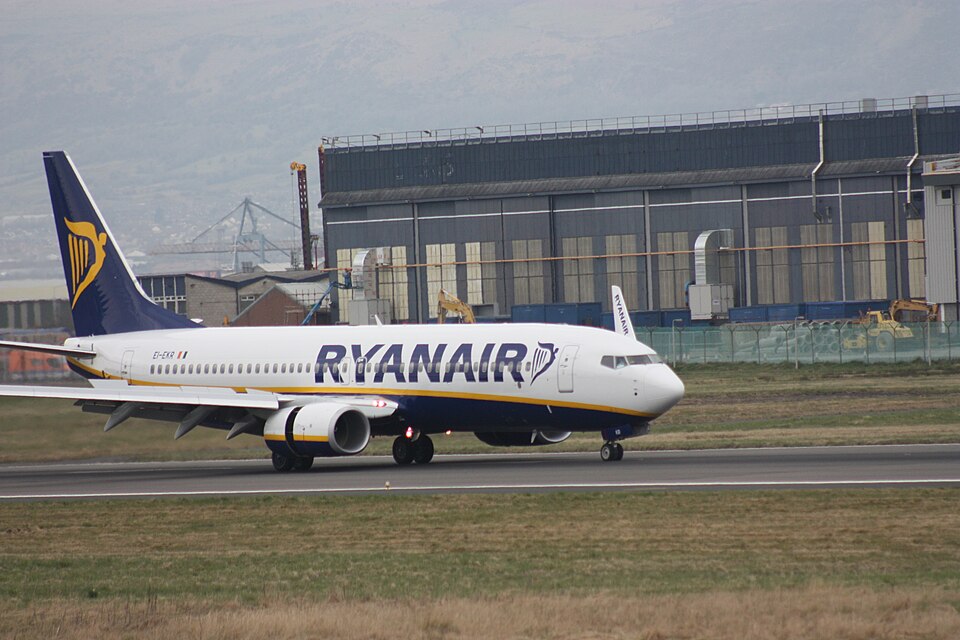
A Ryanair Boeing 737-8AS was forced to perform an evasive maneuver to avoid a Cirrus SF-50 after the latter entered the Palma de Mallorca airport zone without authorization.

What happened

On May 28, 2022, at 10:32 UTC, a near mid-air collision occurred within the Palma Aerodrome Transit Zone (ATZ) in the Balearic Islands, Spain. The incident involved a Ryanair Boeing 737-8AS, registration EI-COK, performing a commercial takeoff from runway 24R at Palma de Mallorca Airport (LEPA), and a private Cirrus SF-50, registration N66HR, flying under visual flight rules (VFR).

The N66HR aircraft entered the Palma ATZ at approximately 10:31 UTC, climbing through 700 ft AMSL. Simultaneously, the EI-EKR was beginning its takeoff roll. As the two aircraft's flight paths converged, the tower controller attempted to contact the N66HR pilot three times, eventually using the emergency frequency to instruct the pilot to turn right to avoid the departing airliner. Despite these warnings, the N66HR continued on its course. At 10:32:11 UTC, the crew of the Boeing 737-8AS initiated an evasive right turn. The closest point of approach occurred at 10:32:21 UTC, with a horizontal separation of 0.65 NM and a vertical separation of only 116 ft. No injuries were reported, and both aircraft continued their flights.

The investigation

The CIAIAC investigation focused on the flight planning and operational conduct of the N66HR aircraft. Investigators examined flight records, air traffic control communications, and the pilot's performance. The investigation established that the N66HR pilot was preoccupied with an unconfirmed knocking noise in the cockpit, which led to the decision to disconnect the autopilot and fly manually. This distraction, combined with a failure to monitor the correct ATZ frequencies, prevented the pilot from receiving timely instructions. Furthermore, the investigation noted that the pilot's language proficiency was insufficient to properly understand and read back ATC instructions, and that the pilot lacked the necessary ratings to operate that specific aircraft model.

Findings

  • The primary cause of the incident was the unauthorized presence of the N66HR aircraft within the Palma ATZ due to deficient flight planning.
  • The pilot of the N66HR failed to comply with VFR communication procedures by not monitoring the established ATZ frequencies.
  • The pilot demonstrated inadequate language proficiency, evidenced by repeated requests for instruction repetition and incorrect readbacks.
  • The pilot's decision-making was flawed, as they chose to continue the flight and fly over the airport centerline while managing an unverified technical issue.
  • The Boeing 737-8AS did not receive a TCAS Resolution Advisory because the system was inhibited below 1,000 ft AGL due to the radio altimeter reading.

Probable cause

The incident was caused by the unauthorized entry of the Cirrus SF-50 into the Palma de Mallorca ATZ due to poor flight planning. Contributing factors included the pilot's lack of appropriate aircraft ratings, poor decision-making regarding an onboard technical distraction, failure to monitor required ATC frequencies, and inadequate English language proficiency.

Frequently asked questions

What happened in the 2022-05-28 BOEING modelo B-737-800 accident near Aeropuerto de Palma de Mallorca-Son Sant Joan (Illes Balears), ES?

A Ryanair Boeing 737-8AS was forced to perform an evasive maneuver to avoid a Cirrus SF-50 after the latter entered the Palma de Mallorca airport zone without authorization.

What aircraft was involved and where did it happen?

The accident on 2022-05-28 involved a BOEING modelo B-737-800, registration EI-EKR, at Aeropuerto de Palma de Mallorca-Son Sant Joan (Illes Balears), ES.

What was the probable cause of the accident?

The incident was caused by the unauthorized entry of the Cirrus SF-50 into the Palma de Mallorca ATZ due to poor flight planning. Contributing factors included the pilot's lack of appropriate aircraft ratings, poor decision-making regarding an onboard technical distraction, failure to monitor required ATC…

Loading the flight search…