Introduction
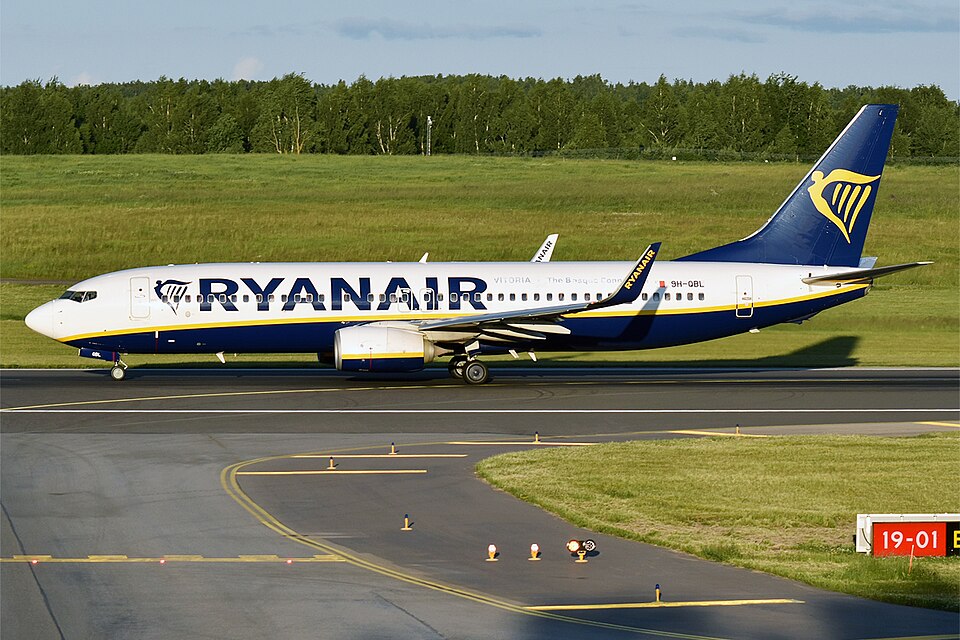
On 12 October 2024, an incident occurred at Las Palmas de Gran Canaria Airport (GCLP) involving two Boeing 737-800 aircraft. The first aircraft, registration 9H-QBL (call sign RYR5822), was on final approach to runway 03R after arriving from Rome. The second aircraft, registration EI-IFS (call sign RYR2296), was preparing for departure on the same runway. The event resulted in a loss of separation between the two aircraft.
Sequence of Events
At 09:04:54 local time, the crew of RYR5822 contacted the approach sector and reported descending to 6,000 ft heading to TISCA. After receiving approach instructions, they were told at 09:12:51 to contact the tower on 118.300 MHz. At 09:13:20, the crew contacted the local control position, where a student controller and an instructor were on duty, both using telephones instead of headsets for communication.
At approximately 09:17, while RYR5822 was on final approach at about 350 ft altitude, the crew of RYR2296 was instructed to enter runway 03R and align for take-off. RYR2296 began its take-off roll, prompting the crew of RYR5822 to abort the approach and execute a right turn to avoid RYR2296, which was climbing ahead of them. This maneuver resulted in a loss of separation between the two aircraft.
Communication Issues
Following the loss of separation, the crews of both aircraft attempted to contact the control tower but received no immediate response. They then contacted Canarias control on respective frequencies. RYR5822 was instructed to climb to 3,000 ft and given vectors for landing, while RYR2296 was cleared to continue its climb and proceed on its planned route.
The investigation revealed that the lack of response from the tower was due to incorrectly connected pins on the communications device. This fault prevented transmissions from the tower from being broadcast externally for a period of time. The controller team had started their shift at about 09:00 and were using telephones for communication, which may have masked the fault.
Investigation Findings
The investigation determined that the primary cause of the loss of separation was air traffic control authorizing a take-off for RYR2296 while another aircraft was on final approach with insufficient separation. A contributing factor was the communication system fault, which made it impossible for tower messages to be transmitted outside during the critical phase. No injuries were reported, and neither aircraft sustained damage during the event.