Factual Information
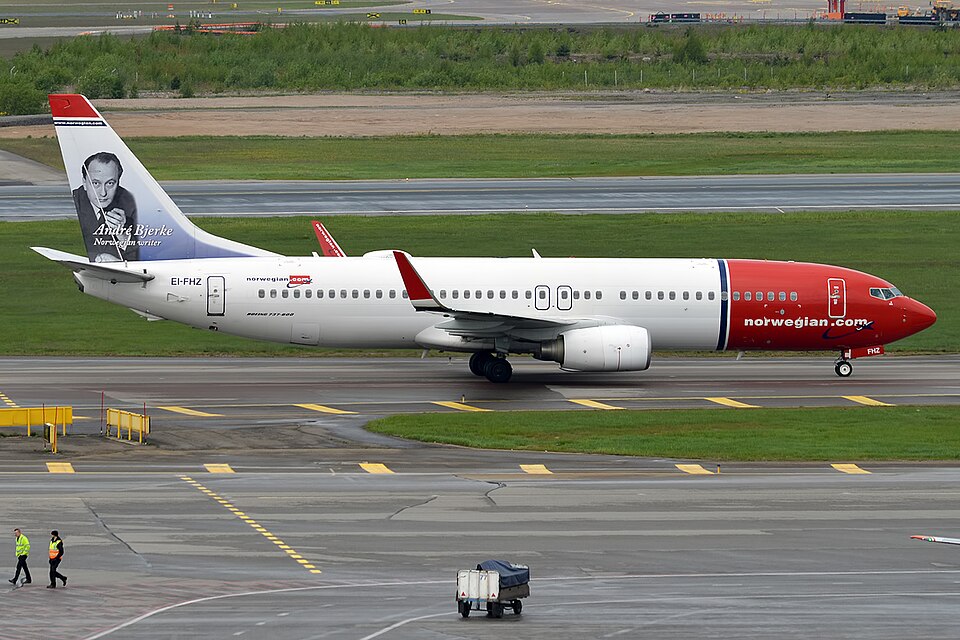
On Thursday, 7 June 2018, at 16:30 local time, a Boeing 737-800 (registration EI-FHZ) operated by Norwegian Air International commenced its takeoff roll on runway 10 at Alicante Airport. The aircraft, with callsign IBK2WH, carried 181 persons (6 crew and 175 passengers) and was en route to Oslo Airport, Norway. Four minutes earlier, at 16:26:27, the tower controller had cleared two runway and apron service (SPP) vehicles, PAPA1 and PAPA6, to conduct the third routine runway check of the day. At 16:30:20, the controller cleared the aircraft for takeoff. The SPP vehicles, which were near the opposite runway threshold (runway 28), heard the takeoff clearance and immediately broadcast that they were still on the runway. The controller then instructed the aircraft to reject takeoff. The vehicles vacated via quick-exit taxiways C4 and C2, respectively. The aircraft crew also stopped and exited the runway via taxiway C2. The investigation noted that the distance between the aircraft and the vehicles remained over 1,000 meters throughout the event. There were no injuries to persons and no damage to the aircraft or other property.
Personnel Information
The captain, a 37-year-old German national, held an airline transport pilot license and had accumulated 8,304 flight hours, of which 8,101 were on the Boeing 737-800. He was the pilot flying at the time of the incident. Details of the first officer were not specified in the source.
Air Traffic Control Staffing
At the time of the incident, the Alicante control tower was operating with a single control position staffed by a student controller and an instructor. The student controller was handling the position.
Communications
Communications between the tower and the aircraft were conducted in English. Communications with the SPP vehicles were in Spanish, which the aircraft crew could not understand.
Conclusions and Causes
The investigation concluded that the incident occurred due to an inappropriate takeoff clearance given to the aircraft by the control tower while the runway was occupied by two previously cleared SPP vehicles. Contributing factors included possible excessive workload on the student controller, the single-position tower configuration, lack of effective supervision by the instructor at the time of the incident, and the use of Spanish for vehicle communications, which prevented the crew from understanding them.
Safety Recommendation
The investigation issued one safety recommendation to FERRONATS, the service provider for the Alicante Airport control tower.