What happened
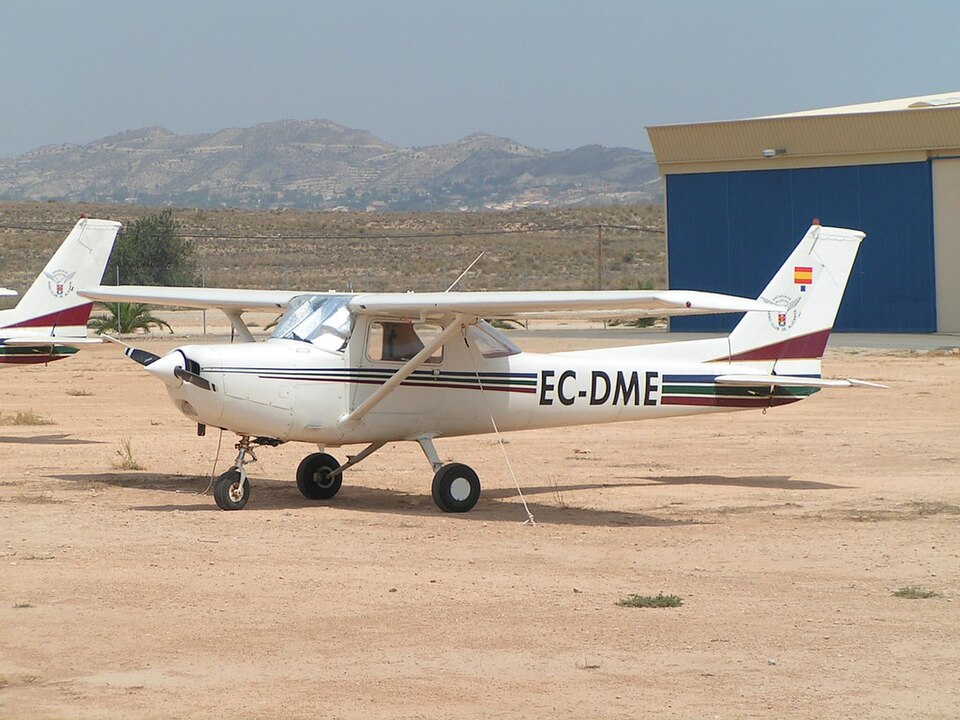
On September 28, 2013, at 12:45 local time, a Cessna 152, registration EC-DME, experienced a runway excursion during landing at the Mutxamel aerodrome in Alicante, Spain. The aircraft was being operated for a private flight consisting of takeoff and landing practice.
After taking off from runway 12, the pilot completed a circuit and performed the first landing. The pilot reported that the initial touchdown was centered on the runway. However, during the landing roll, the right wing suddenly lifted. This caused the aircraft to veer to the right of the runway centerline, eventually exiting the paved surface approximately 35 and 350 meters from the runway head. The aircraft struck a marker, which helped bring it to a stop. The impact caused damage to the left wing, the nose gear, and the propeller. The pilot, who was the sole occupant, was uninjured and evacuated the aircraft on his own.
The investigation
The investigation focused on the meteorological conditions, the pilot's maneuvers during the landing roll, and the pilot's experience. Investigators analyzed the wind components for runway 12, noting that the wind was 17 knots from 170°, variable between 160° and 200°, with gusts up to 22 knots. These conditions resulted in crosswind components ranging from 13 to 16.7 knots.
The investigation examined the pilot's technique, specifically the use of the "aileron into the wind and opposite rudder" method required for crosswind landings. The damage to the left wing suggested that the right wing lifted, likely due to insufficient aileron input to counteract the wind. The investigation also reviewed the pilot's flight experience, noting that while the pilot was familiar with the aircraft and the aerodrome, he had relatively low total flight hours (66 hours) and had not flown frequently in the preceding months.
Findings
- The primary cause of the incident was operating the aircraft in crosswind conditions that exceeded the maximum limits established in the aircraft's flight manual, which specifies a 12-knot crosswind limit.
- The wind was variable and gusty, with crosswind components between 13 and 16.7 knots.
- The pilot's experience in managing high-intensity, variable crosswind conditions was likely limited.
- There were no mechanical or engine failures contributing to the event.