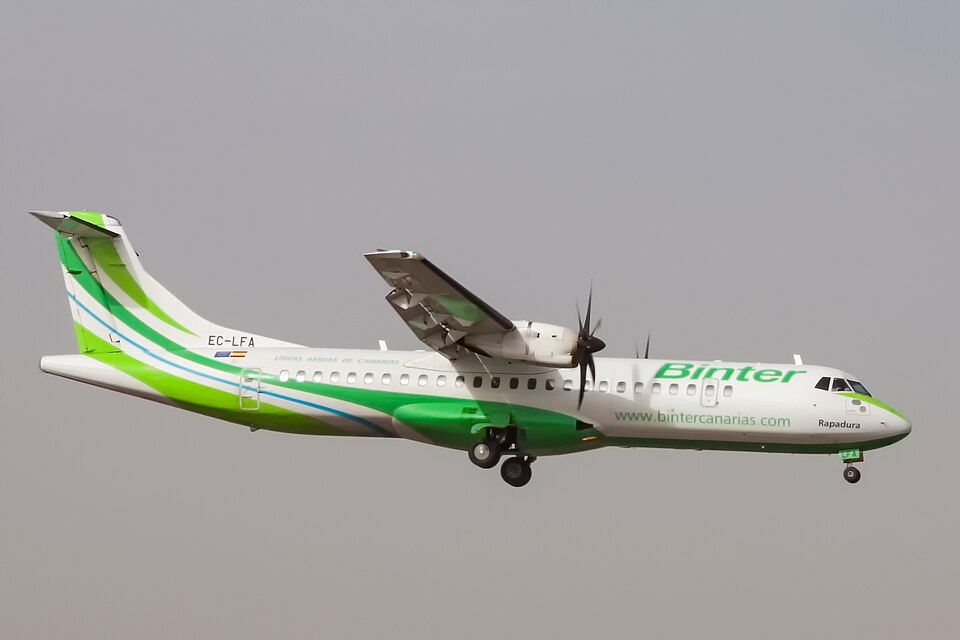
History of the Flight
On 11 December 2013, an ATR 72-212A aircraft, registration EC-LFA, operated by Naysa, departed from Gran Canaria Airport on a scheduled commercial passenger flight to Tenerife-North Airport. After takeoff, the crew made a left turn to avoid clouds and continued the flight normally.
During the approach, the crew was cleared to land on runway 12 after being informed of wind conditions. As the aircraft neared the runway near taxiway E1, the vertical speed was excessive, causing the aircraft to bounce. The bounce initially involved the nose wheel, followed by three additional bounces on the main landing gear. The aircraft veered left, and by the time it reached taxiway E2, the nose wheel departed the runway onto the grassy area to the left of the runway. The captain reported a runway excursion to the tower and requested assistance.
Emergency Response
The airport's emergency plan was activated. Passengers were evacuated, and the aircraft was towed. The runway remained closed for approximately two hours, leading to diversions of other aircraft. At 20:33 local time, the runway was declared clear and operational.
Damage to Aircraft
The aircraft's nose wheel was destroyed. The main landing gear sustained damage, specifically to the left-side leg and strut. No other damage was reported.
Injuries to Persons
None of the 51 passengers or 4 crew members were injured.
Personnel Information
The captain, a 34-year-old Spanish national, held an Airline Transport Pilot License (ATPL(A)) with an ATR 42/72 rating valid until 31 March 2014. He had accumulated 5,107:57 total flight hours, including 4,014:12 on type and 312:15 as pilot in command. The first officer, a 42-year-old Spanish national, also held an ATPL(A) with an ATR 42/72 rating valid until 28 February 2014. Both pilots held valid class-1 medical certificates.
Aircraft Information
The aircraft was an ATR 72-212A, registration EC-LFA, owned and operated by Naysa. The incident occurred on 11 December 2013 at 18:44 local time.
Meteorological and Aerodrome Information
The preceding aircraft reported heavy rain and highly reduced visibility just before landing. Runway 12 at Tenerife-North Airport was in use. No further weather or aerodrome details were recorded in the investigation.