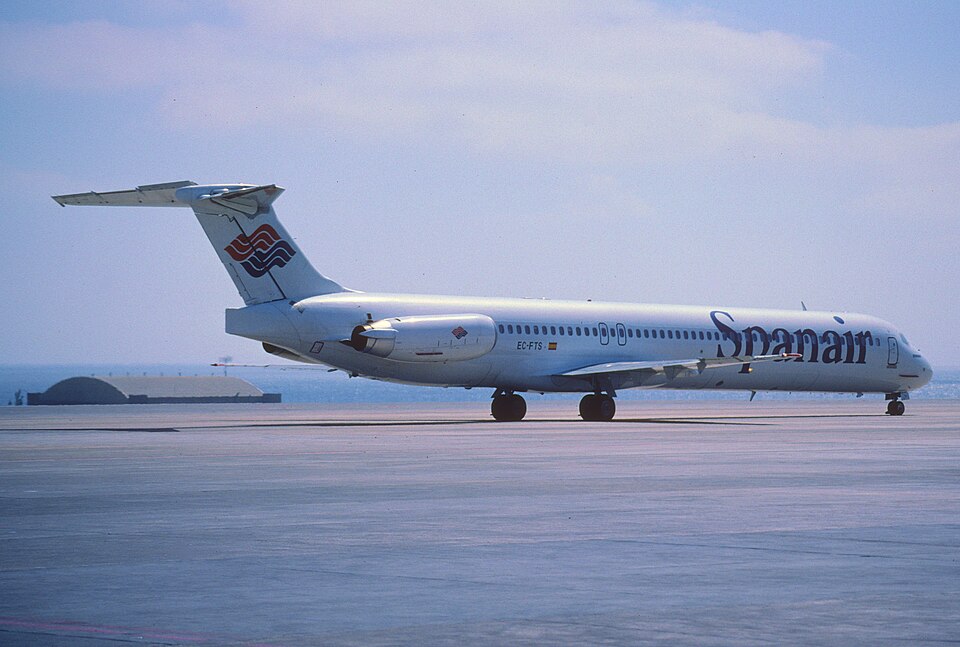
Flight History
The aircraft, a McDonnell Douglas MD-83 registered EC-FTS, operated by Spanair as flight AEA9363, departed Alicante Airport at 12:38 local time on a scheduled domestic service to Palma de Mallorca. The captain was the pilot flying, and the copilot handled communications. Takeoff and initial climb were normal. At 12:41, while climbing through 5,400 ft and cleared to flight level 120, the captain noted a left engine failure and informed the copilot. They immediately advised air traffic control (ATC) of the situation and requested a return to Alicante. A flight attendant confirmed that a noise had been heard from the left engine. The crew declared an emergency and received clearance to land on any runway.
Injuries and Damage
During the evacuation that followed landing, 19 passengers and one firefighter sustained minor injuries. No fatalities occurred. Damage to the aircraft was limited to the left engine.
Personnel
The flight crew comprised a captain aged 35, holding an airline transport pilot license since 12 February 1997, with 7,361 total flight hours, of which 6,860 were on the MD-80 series. The copilot, purser, and three flight attendants were also aboard. The captain had completed two crew resource management courses in the preceding six months.
Investigation
The Civil Aviation Accident and Incident Investigation Commission (CIAIAC) conducted the investigation. The flight data recorder and cockpit voice recorder were analyzed. The left engine was disassembled for examination. The investigation found that the engine failure resulted from the simultaneous or near-simultaneous breakage of two stator vanes in the 8th stage of the high-pressure compressor (HPC), leading to general engine failure.
Evacuation
After landing, the crew taxied clear of the runway and stopped. ATC informed them of a fire in the left engine, though no fire warnings had activated in the cockpit. The crew ordered an evacuation. The tailcone was jettisoned, but the inflatable evacuation slide failed to deploy. Airport emergency services applied fire extinguishing agents to the left engine.
Probable Cause
The probable cause of the incident was the simultaneous or near simultaneous breakage of two stator vanes in the 8th stage of the HPC resulting in general engine failure.