Nose gear failure leads to runway excursion at Madrid-Barajas

Casualties unknown • Aeropuerto de Madrid-Barajas (Madrid), ES

A Fairchild SA226-AT cargo flight experienced a nose gear failure during landing at Madrid-Barajas, resulting in propeller strikes and a runway excursion.

What happened

On the night of November 19, 2007, a Fairchild SA226-AT operated by Pirinair Express, acting as a wet lease for Swiftair, was performing a cargo flight from Vitoria to Madrid. During the approach to runway 33L at Madrid-Barajas, Air Traffic Control (ATC) requested that the crew maintain a high speed to accommodate a faster aircraft following in the sequence. The crew complied, flying at approximately 180 kt, which was significantly above the standard reference speed of 114 kt for the aircraft's weight.

Upon touchdown, the main gear made contact with the runway, but the nose gear failed to extend. As the aircraft decelerated, the nose descended and impacted the runway surface, dragging for approximately 200 to 300 meters. The propeller blades of both engines struck the pavement, causing immediate loss of engine RPM and electrical generator failure. The crew managed to steer the aircraft toward the left side of the runway and performed an emergency engine shutdown. Following the impact, a fuel leak was observed from the left engine, prompting an immediate evacuation of the two crew members, both of whom sustained serious injuries.

The investigation

The CIAIAC investigation focused on why the nose gear remained in the retracted position and why the crew was unaware of the improper configuration. Investigators examined the aircraft's hydraulic system, maintenance records, and the flight crew's actions. Post-accident testing with an external hydraulic pump showed that the landing gear extension and warning systems functioned normally under standard pressure. However, the investigation noted that the high-speed approach requested by ATC likely increased the crew's workload and delayed the execution of standard landing checklists.

Findings

  • The primary cause of the incident was the failure of the nose gear to unlock and extend in the seconds preceding touchdown.
  • The landing gear warning horn likely failed to alert the crew because the approach was conducted at high power settings and the flaps were not extended beyond 20 degrees until moments before impact.
  • The request from ATC to maintain a higher approach speed contributed to the incident by increasing the crew's workload and delaying the proper configuration of the aircraft.
  • The crew did not perform the standard "kill items" checklist, which would have confirmed the gear and flap positions.
  • The crew's lack of familiarity with specific emergency evacuation procedures resulted in a failure to notify ATC of the emergency immediately.

Probable cause

The nose gear failed to unlock and extend during the final moments of the landing. This was compounded by a high-speed approach requested by ATC, which increased crew workload and prevented the timely execution of configuration checklists and the activation of landing gear warning alarms.

Frequently asked questions

What happened in the 2007-11-19 Swearingen SA-226-TC Metro III accident near Aeropuerto de Madrid-Barajas (Madrid), ES?

A Fairchild SA226-AT cargo flight experienced a nose gear failure during landing at Madrid-Barajas, resulting in propeller strikes and a runway excursion.

What aircraft was involved and where did it happen?

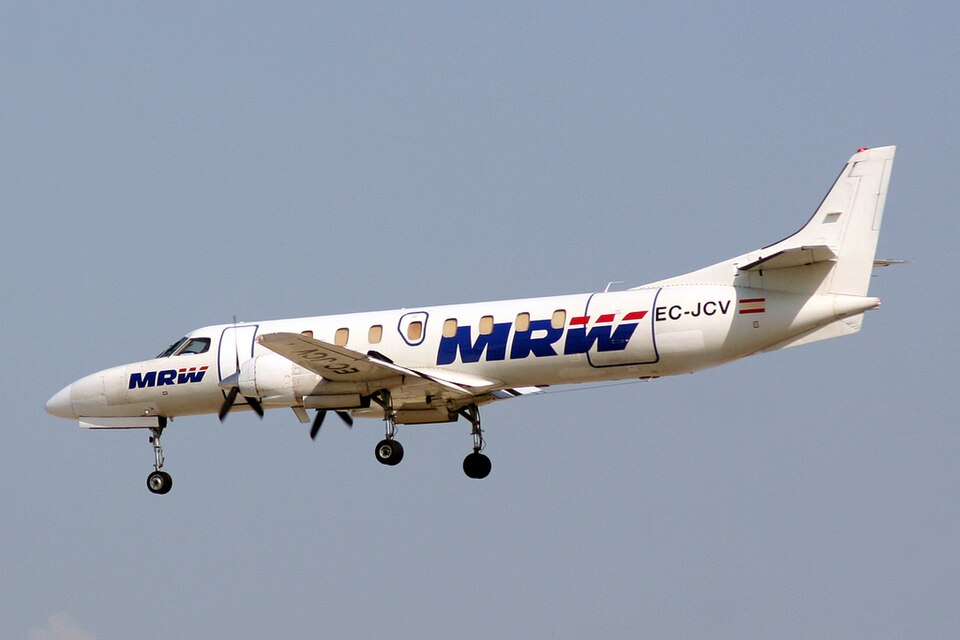
The accident on 2007-11-19 involved a Swearingen SA-226-TC Metro III, registration EC-JCV, at Aeropuerto de Madrid-Barajas (Madrid), ES.

What was the probable cause of the accident?

The nose gear failed to unlock and extend during the final moments of the landing. This was compounded by a high-speed approach requested by ATC, which increased crew workload and prevented the timely execution of configuration checklists and the activation of landing gear warning alarms.

Investigation report by the Spanish Civil Aviation Accident and Incident Investigation Commission (CIAIAC). Original record: https://www.transportes.gob.es/recursos_mfom/2007_047_in_0.pdf. This page is a structured re-presentation; facts and quotes are in the Comision de Investigacion de Accidentes e Incidentes de Aviacion Civil (CIAIAC), Spain - Ministerio de Transportes y Movilidad Sostenible.
Loading the flight search…