Incident Overview
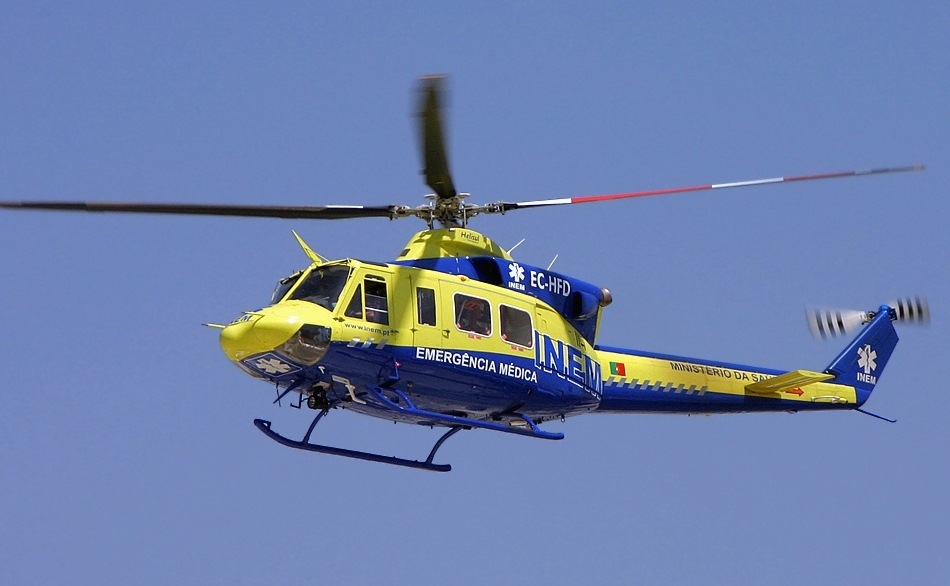
On Monday, August 8, 2005, at 16:50 local time, a Bell 412 EP helicopter with registration EC-HFD, operated by Helisureste, was conducting a regularly scheduled commercial passenger flight from Ceuta to Malaga. The helicopter carried two pilots and seven passengers. While cruising at an altitude of 5,000 feet, the left rear emergency window became detached. The detachment was caused by an inadvertent bump from a minor passenger traveling with his father. The crew observed that the detached window did not impact the helicopter's structure or cause any damage. They subsequently reduced altitude and velocity, calmed the passengers, and continued to Malaga Airport, where the helicopter landed without further incident. No passengers or crew members were injured.
Aircraft and Crew Information
The helicopter, a Bell 412 EP (serial number 36183, year of manufacture 1997), was powered by two Pratt & Whitney PT6T-3D engines. Its airworthiness certificate was valid until September 29, 2005. The pilot at the controls held an Airline Transport Pilot – Rotorcraft-Helicopter license, with 3,174 total flight hours, of which 2,099 were on the Bell 412 EP. The aircraft had a capacity for up to 13 passengers and was equipped with two sliding doors, each containing two rectangular emergency windows made of clear acrylic material.
Emergency Window Details
The left rear emergency window was designed to facilitate ground evacuation by detaching when pressure is applied to either lower corner, requiring a force of approximately 50 lb (28 kg). The window was held in place by a retainer bonded to the metallic frame, except at the two lower corners. A filler inserted into a groove in the retainer secured the window. Maintenance inspections were required every 300 hours, involving visual checks of the filler and retainer for damage, cuts, swelling, and nicks.
Previous Events
The investigation documented two prior in-flight window detachments on Bell 412 helicopters in Spain. The first, on August 16, 2002, involved the same aircraft and window; deliberate passenger manipulation was considered the most likely cause (report IN-008/2002). The second, on June 4, 2004, involved the forward right emergency window detaching and shattering, causing slight facial injuries to one passenger. In that case, inadequate bonding time between the retainer and frame, due to insufficient curing (24-hour requirement not met), was determined as the most probable cause.
Safety and Maintenance
The operator conducted pre- and post-flight visual inspections, 25-hour/30-day inspections, and 300-hour inspections of the emergency windows. These checks included verifying the condition of the windows, filler, and retainer, as well as proper bonding. A safety recommendation (REC 49/04) had been issued to emphasize adherence to maintenance manual procedures when replacing windows. The emergency window in question had been replaced in February 2002 following the intentional detachment incident.
Regulatory Context
Federal Aviation Regulations (FAR) 29.809 require means to prevent inadvertent in-flight opening of emergency exits. The manufacturer and the FAA were consulted regarding the design and history of window detachments. Out of 14 known cases since 1981, three involved impacts with other helicopter parts (stabilizer or tail rotor), causing minor damage. The manufacturer considered the design satisfactory if installation and maintenance guidelines were followed and passengers properly informed.