Pilot Incapacitation During Approach at Barcelona-El Prat

Casualties unknown • Aeropuerto de Barcelona (Barcelona), ES

A Boeing 737-300 experienced a medical emergency during final approach at Barcelona, resulting in the death of the commander following a sudden myocardial infarction.

What happened

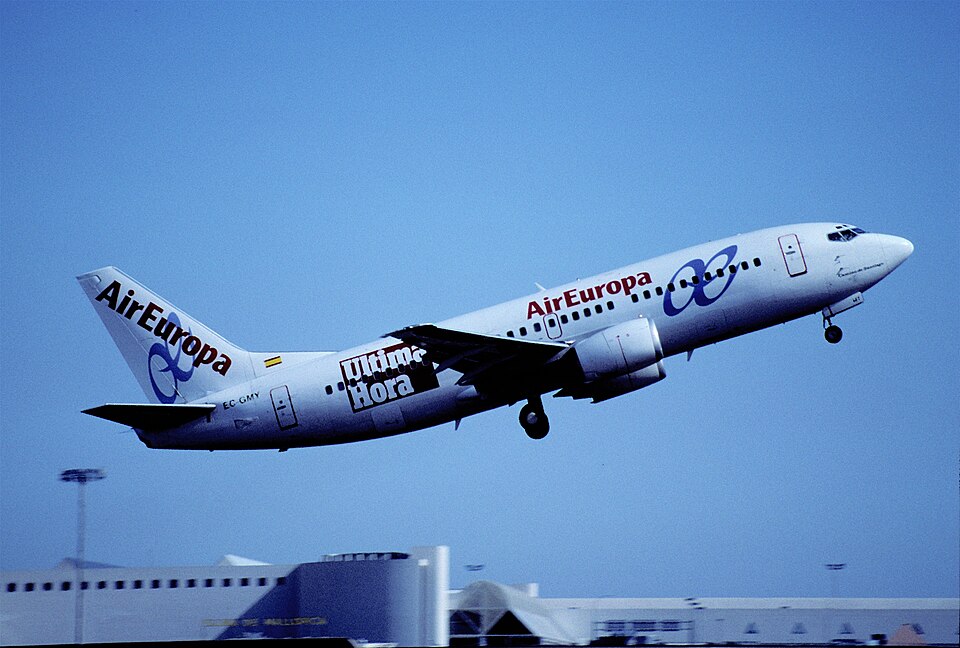
On December 24, 2001, an Air Europa Boeing 737-300-36Q, registration EC-GMY, was performing the third sector of a four-flight rotation between Palma de Mallorca and Barcelona. During the final approach to runway 07 at Barcelona-El Prat Airport, the commander suddenly became unwell while the aircraft was approximately 500 ft above the ground.

The co-pilot immediately assumed control of the aircraft, moved the commander's hands away from the thrust levers, and requested assistance from the lead flight attendant to secure the commander with seatbelts to prevent him from interfering with flight controls. The co-pilot continued the approach, selecting flaps 30°, and landed the aircraft. The touchdown was somewhat abrupt, though no damage occurred to the aircraft.

To expedite the departure from the runway via taxiway E4 and to ensure rapid medical access, the co-pilot deactivated the autobrake system to use manual braking and deployed the L1 door ramp. Medical professionals on board provided immediate assistance. The commander was evacuated via the ramp and transported to a nearby hospital, where he later passed away due to ischemic heart disease.

The investigation

The CIAIAC examined the flight data, cockpit voice recorder (CVR), and the medical history of the crew. The FDR indicated that the aircraft maintained a stable flight path below 500 ft, though the landing speed was higher than the reference speed. The investigation also reviewed the pilot's medical certification, noting that he had been cleared for multi-crew operations (OML) following a previous myocardial infarction and stent placement in 2000.

Findings

  • The commander suffered a sudden myocardial infarction during the final approach phase.
  • The co-pilot demonstrated effective crew resource management by quickly assuming control, notifying ATC, and managing the incapacitated pilot.
  • The co-pilot's decision to use manual braking to clear the runway quickly resulted in a somewhat abrupt taxiing maneuver, as the aircraft lacked nosewheel steering control from the right-hand seat.
  • The medical history of the commander included a previous heart attack in 1998 and a second stent placement in August 2000, which met the regulatory requirements for flight duties at the time of the incident.

Probable cause

The primary cause of the incident was the sudden medical incapacitation of the commander due to an acute myocardial infarction during the approach phase.

All Boeing 737-800 accidents →

Frequently asked questions

What happened in the 2001-12-24 Boeing 737-300-36Q accident near Aeropuerto de Barcelona (Barcelona), ES?

A Boeing 737-300 experienced a medical emergency during final approach at Barcelona, resulting in the death of the commander following a sudden myocardial infarction.

What aircraft was involved and where did it happen?

The accident on 2001-12-24 involved a Boeing 737-300-36Q, registration EC-GMY, at Aeropuerto de Barcelona (Barcelona), ES.

What was the probable cause of the accident?

The primary cause of the incident was the sudden medical incapacitation of the commander due to an acute myocardial infarction during the approach phase.

Investigation report by the Spanish Civil Aviation Accident and Incident Investigation Commission (CIAIAC). Original record: https://www.transportes.gob.es/recursos_mfom/2001_061_in.pdf. This page is a structured re-presentation; facts and quotes are in the Comision de Investigacion de Accidentes e Incidentes de Aviacion Civil (CIAIAC), Spain - Ministerio de Transportes y Movilidad Sostenible.

Loading the flight search…