Background
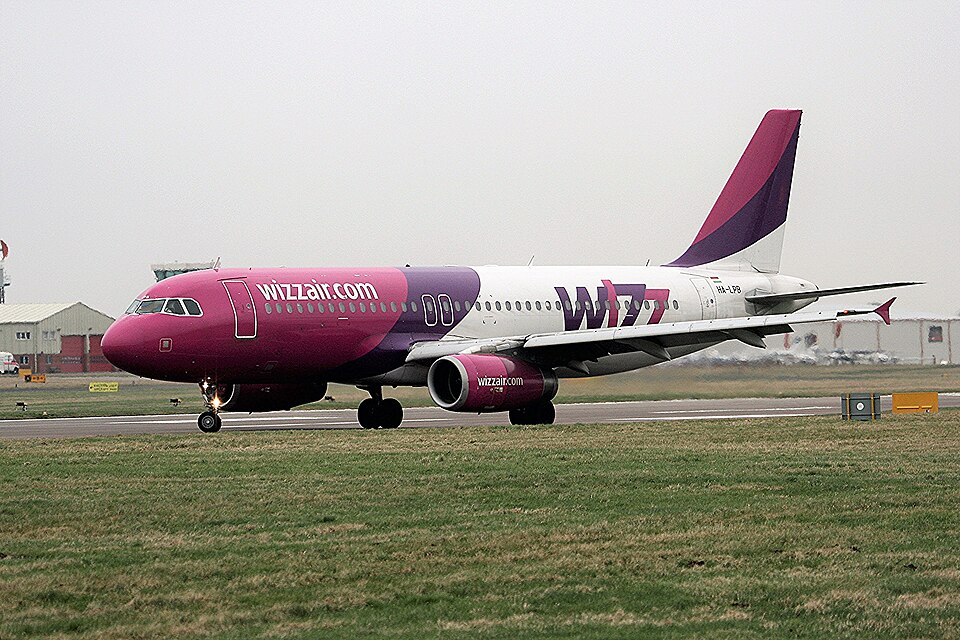
On 2 March 2009, an Airbus A320-233 registered HA-LPB, operated by Wizz Air Hungary Kft, was involved in an incident over Kalmar county, Sweden. The aircraft was performing a scheduled flight (W6524) from Stockholm/Västerås Airport to Poznan, Poland. According to the Swedish Accident Investigation Board (SHK) report RL 2009:19e, the aircraft had arrived at Västerås with passengers from Poznan earlier, and during its ground time, it was refuelled, de-iced, and otherwise prepared for the return flight.
Incident Details
During the cruise phase, at cruising altitude in darkness over the southern part of Småland, an unpleasant smell arose on the flight deck. The flight crew, unfamiliar with the odour and concerned about potential incapacitation, decided as a preventive measure to use their oxygen masks from the permanent oxygen supply intermittently for the remainder of the flight. Simultaneously, two cabin crew members and one passenger experienced slight breathing difficulty and eye irritation. To alleviate these symptoms, the cabin crew provided oxygen from portable oxygen bottles carried on the aircraft.
The commander assessed that there was no increased flight safety risk due to the smell and could not detect any aircraft faults. He considered landing at the nearest airfield but deemed the time saved marginal compared to continuing to the destination. The flight proceeded without further problems and landed at Poznan Airport.
Investigation Findings
The SHK investigation revealed that de-icing fluid had entered and contaminated the aircraft's air conditioning system during ground de-icing at Stockholm/Västerås Airport. The contamination occurred because the de-icing treatment commenced before the ground staff had received clearance from the flight crew that the aircraft was ready. Furthermore, the treatment was applied without knowledge of the specific requirements of the Airbus A320-233 type. During the flight, the fluid evaporated and mixed with the air supplied to the passenger cabin.
Investigators found deficiencies in the education and training of the personnel who performed the de-icing service at the airport. Additionally, there were deficiencies in the aircraft operator's training and oversight of the supplier of this service at the airport.
Conclusions
The SHK concluded that the incident had multiple contributing factors: the de-icing started prematurely, lacked awareness of aircraft-specific procedures, and was compounded by inadequate training of de-icing personnel and insufficient operator checks on the service provider. No injuries or damage were reported; all six crew members and 79 passengers were uninjured.