Background
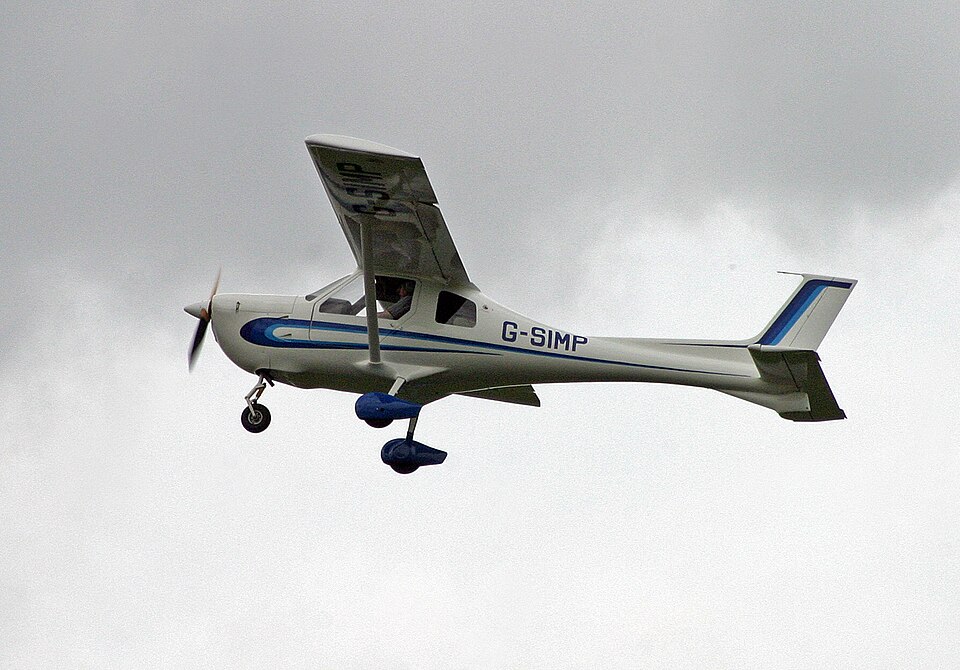
The pilot had operated from a grass strip at Wellcross Farm for nine years, initially using a Piper J3 Cub and later the Jabiru SP-470. A tree alongside the strip served as a mounting for a windsock.
Accident Flight
On 3 June 2006 at 1540 hrs UTC, the pilot returned from a flight to Popham and Sandown. He flew over the strip at 800 ft to check the windsock, which indicated a slight preference for Runway 04, although the wind was approximately 80° off the runway direction. The pilot estimated the wind velocity at about 5 kt.
Before landing, the pilot noted that the crosswind and lack of a headwind component would result in a higher ground speed on touchdown. He was aware that the strip surface was uneven, with several transverse ridges at the 04 end that could cause an aircraft to become airborne again after initial touchdown. This was considered more likely if the aircraft was flown solo and the landing was fast. The pilot was also concerned about the fragile nose gear of the Jabiru and normally held the nosewheel off on rough surfaces until speed decayed, applying intermittent brake pressure between bumps.
On this occasion, the pilot used his normal approach speed of 60 kt with full flap and his usual braking technique. He recalled applying some power after one bump to cushion the touchdown. As he reached the tree, where the aircraft had usually decelerated to taxi speed, the speed was higher than usual but sufficient distance remained to stop before the end of the runway. At that point, the aircraft suddenly yawed left and struck a tree with the port wing, causing substantial damage to the wing and cockpit. The pilot, the sole occupant, was not injured.
The pilot believed that the benign conditions may have led to complacency, catching him off guard. He stated that the Jabiru is normally easy to land on smooth runways but more challenging on undulating surfaces.
Discussion
Sudden loss of directional control on the ground is unusual in tricycle landing gear aircraft. It has been known to occur when significant pressure is applied to the nosewheel during the rollout while sufficient airspeed remains to generate wing lift. This phenomenon, known as wheel-barrowing, removes much of the loading from the main gear while leaving insufficient airspeed for the tailfin to provide stability and rudder control. The undulating surface may have briefly caused sufficient pressure on the nosewheel while wing lift remained, contributing to this phenomenon.