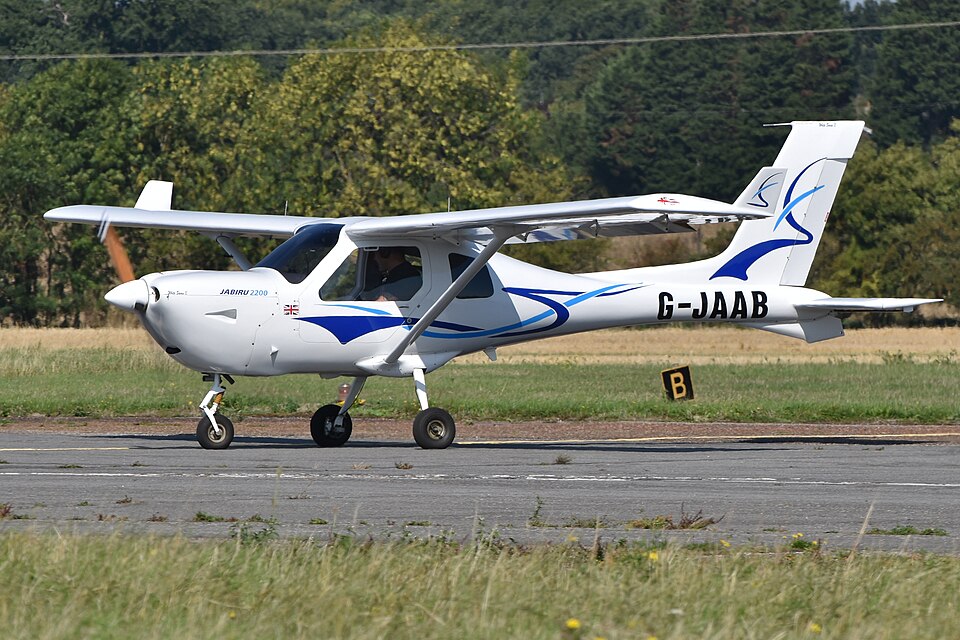
History of the Flight
The pilot/owner conducted a full pre-flight inspection and refueled with Avgas before departing from Rochester to Manchester Barton. After an uneventful flight, the aircraft was refueled again at Barton. About an hour later, the pilot departed for Rochester. Approximately two hours into the return flight, the pilot felt a sudden engine vibration. He reduced power, which lessened the vibration, but the aircraft could not maintain altitude. He made a PAN call to Cranfield ATC, reported the situation, and set the transponder to 7700. As the aircraft descended through 1,000 ft amsl, the pilot decided to perform a forced landing in a field. He declared a MAYDAY and approached a field, but the engine stopped during the approach. Touchdown was normal, but the nosewheel dug into soft ground, causing the aircraft to turn right and the left wing to contact the ground. The aircraft came to a rapid halt. The pilot shut down the electrics and fuel, confirmed no fire or fuel leak, then attempted to contact ATC. Although he could hear Cranfield, they could not hear him; another aircraft relayed his message.
Engineering Examination
The engine was taken to the manufacturer's UK agent for strip examination. The No 3 cylinder exhaust valve had fractured at the stem adjacent to the head radius. Metallurgical examination revealed beachmarks characteristic of fatigue crack growth, with multiple initiation sites. The remaining three exhaust valves exhibited small transverse cracks in similar locations. All four exhaust valves showed signs of high-temperature exposure. Energy dispersive X-ray analysis identified lead, phosphorus, bromine, carbon, and oxygen on the fracture surface, consistent with combustion products of Avgas. The engine had accumulated 121 hours since manufacture and had a 100-hour maintenance check in August 2007. It was configured per Jabiru Service Letter JSL 002-1, 'Jabiru Engine Economy Tuning', and had been operated only on 100 LL Avgas.
Other Information
During the investigation, a similar failure was observed on another Jabiru 2200 engine (from G-CBIP) which had operated approximately 300 hours since valve replacement. That engine also had JSL 002-1 embodied, and its No 1 exhaust valve showed fatigue cracking with similar deposit characteristics.