Incident Summary
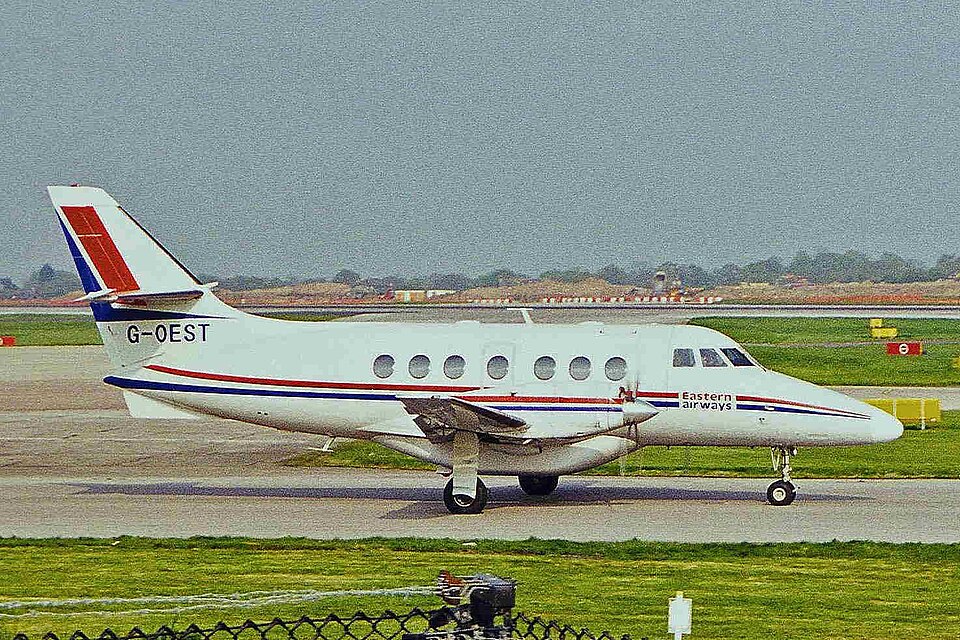
On 23 November 2000 at 1408 UTC, a Jetstream 3202 (registration G-OEST) operated as a public transport passenger flight at Aberdeen Airport. As the aircraft began to taxi and moved approximately 30 metres, the captain smelled burning. A passenger approached the flight deck, reporting smoke in the cabin. The captain observed smoke pouring down the right side passenger cabin windows. He instructed the first officer to shut down both engines and announced an evacuation via the public address system. Air Traffic Control were informed and the Airport Fire Service was called. After switching off the aircraft electrical systems, the captain followed the first officer in evacuating the aircraft. All passengers had already cleared the aircraft and were re-entering the terminal.
Sequence of Events
The smoke was described as thick, grey-yellow, and appeared to emanate from behind the cabin trim in front of the window transparencies. The smell was characterised as 'plastic/wiring/toxic'. The Airport Fire Service arrived promptly, but the smoke dissipated quickly once the aircraft's electrical supply was switched off.
Aircraft Examination and Findings
The aircraft was subsequently taken to the maintenance area for ground runs. The source of the smoke was traced to the forward right side power unit for the cabin lighting. This unit was a type TR992-10, which had been fitted following a manufacturer's Service Bulletin (SB 33-JA 901142) issued in February 1990. The SB called for replacement of earlier lighting units (Part Nos TR992 or TR992-03) after failures were observed; compliance was carried out on G-OEST on 20 August 1991.
The failed unit was examined by the manufacturer. They concluded that it had suffered internal overheating, leading to a 'burn-through' of the case. It was postulated that a short circuit in the internal transformer caused overheating of the varnish-impregnated copper coil, resulting in smoke. The manufacturer noted that over 7,000 units of this type had been delivered to service, and this was the first such failure encountered.