Incident Overview
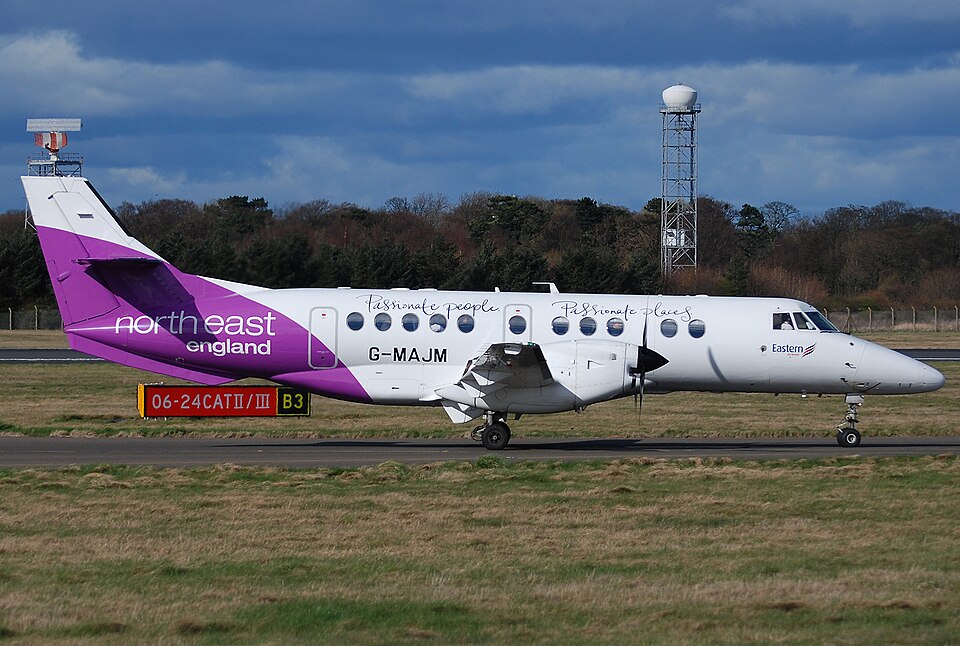
On 23 February 2005, a Jetstream 4100 (registration G-MAJM) experienced a sudden pitch change while climbing through 9,000 feet on a scheduled passenger flight from Aberdeen, Scotland. The autopilot had just been engaged. When disengaged, pitch control was severely restricted. The crew conducted a precautionary landing at Aberdeen, where full elevator control was restored upon touchdown. No injuries to the three crew or seven passengers were reported, and no damage occurred.
Flight History
The aircraft had been parked outside overnight during snowfall. Visible ice was removed in the morning, but no de-icing fluid was applied, and the horizontal tail surfaces were not inspected or treated further. The commander conducted a visual pre-flight inspection but could not see the top surface of the tailplane. Control checks showed full and free movement before departure. Takeoff was uneventful with ice protection systems off. As the aircraft entered cloud at about 2,000 feet, ice protection was activated. Ice was detected at 7,500 feet, and the aircraft cleared cloud around 8,000 feet. The first officer flew manually to 9,000 feet without issues. Upon engaging the autopilot, a sharp pitch change occurred. The autopilot was disengaged, but manual pitch control was very limited, with only restricted nose-up elevator authority. The captain, who was physically stronger, had slightly more control.
Elevator Control System
The Jetstream 4100 has independent cable and rod systems for each elevator half, connected via a common torque tube on the control columns. A manual disconnect handle can separate the two systems. The pilots elected not to use it because the captain maintained adequate pitch control using elevator trim. A PAN was declared, and the aircraft returned to Aberdeen on a long, shallow approach. Pitch control improved during descent and was fully restored before landing.
Post-Flight Findings
After landing, ice was observed falling from the gap between the elevator leading edge and the fixed tailplane. Hangar inspection revealed that the space was filled with ice. No faults were found with the elevator hinge bearings, and no water was present in the actuating system.
Conclusion
The captain attributed the control restriction to ice on the tailplane that was not visible before takeoff, accumulated due to lack of de-icing fluid. Further ice and water accumulated in the elevator gap while in cloud and froze during climb, jamming the elevator. Manual disconnection of the elevator systems would not have helped because both halves were similarly affected.