Event
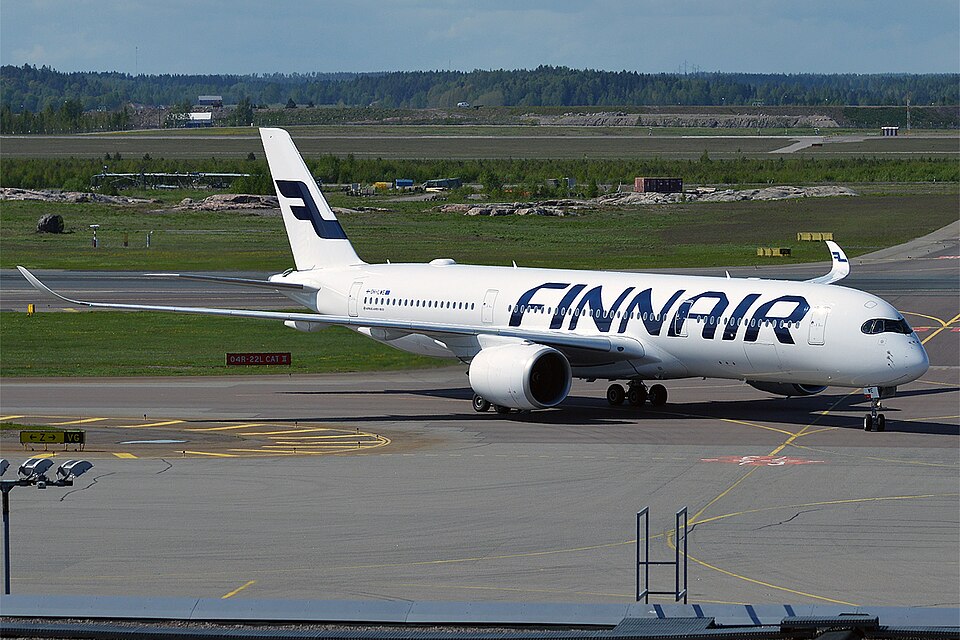
On 21 February 2021 at 18:07 local time, an Airbus A350 aircraft operated by Finnair experienced a loss of control during taxi at Helsinki-Vantaa Airport. The three-crew flight was preparing to depart on a cargo service to Tokyo, Japan. No passengers were on board. As the aircraft taxied from gate W44 toward runway 04L, it partially slid off a taxiway due to icy conditions.
Background and Conditions
The airport was experiencing freezing drizzle, which had been forecast for the period between 16:00 and 24:00. The airfield maintenance categorized the taxiway friction level as "poor". The crew was aware of the adverse weather and field conditions. During their transport to the aircraft, they observed de-icing agents being applied on the apron, indicating freezing conditions. The parked aircraft had some snow and ice on its surfaces, prompting the captain to order de-icing.
Sequence of Events
After engine start, the captain used both engines for taxi due to the slippery conditions, following air traffic control instructions. The taxi route was from gate W44 via taxiways VH, Z, and ZG, crossing runway 04R, then to de-icing pad 604 on apron APN 6. During the initial taxi, the crew discussed the weather. The first curve on taxiway ZG was slippery, but the aircraft reached the de-icing pad without incident. De-icing took 15 minutes in two stages. After completion, the crew completed checklists and received clearance to taxi via BW, W, and WZ toward the holding point for runway 04L.
As the aircraft exited the de-icing pad, the captain noticed the nose wheels losing traction on the icy surface, causing the aircraft to drift toward the edge of the taxiway. The first officer also observed the lack of nose-wheel grip on the taxi camera display and alerted the crew. The engine anti-ice system was active, which increased idle thrust, contributing to the reduced control. The aircraft slid partially off the taxiway before stopping.
Aftermath
The crew reported the incident to air traffic control. No injuries occurred, and the aircraft sustained no significant damage according to the investigation. The aircraft was towed back to the apron.
Investigation
The Safety Investigation Authority of Finland conducted an investigation. The report focused on the sequence of events, environmental factors, and operational procedures. The investigation noted the challenging conditions created by freezing drizzle and the limitations of nose-wheel steering on icy surfaces.