Incident Summary
A pilot-in-command reported that he was cleared for an Instrument Landing System (ILS) approach. During the approach, he deployed spoilers to intercept the glideslope. At the outer marker, the landing was extended as the airspeed was reduced through 200 knots. As airspeed decreased, the spoilers were retracted and flaps were extended to 20 degrees. The aircraft began drifting to the right, and flaps were lowered to 40 degrees as the drift was corrected. The aircraft floated and touched down long on the runway.
Post-Landing Events
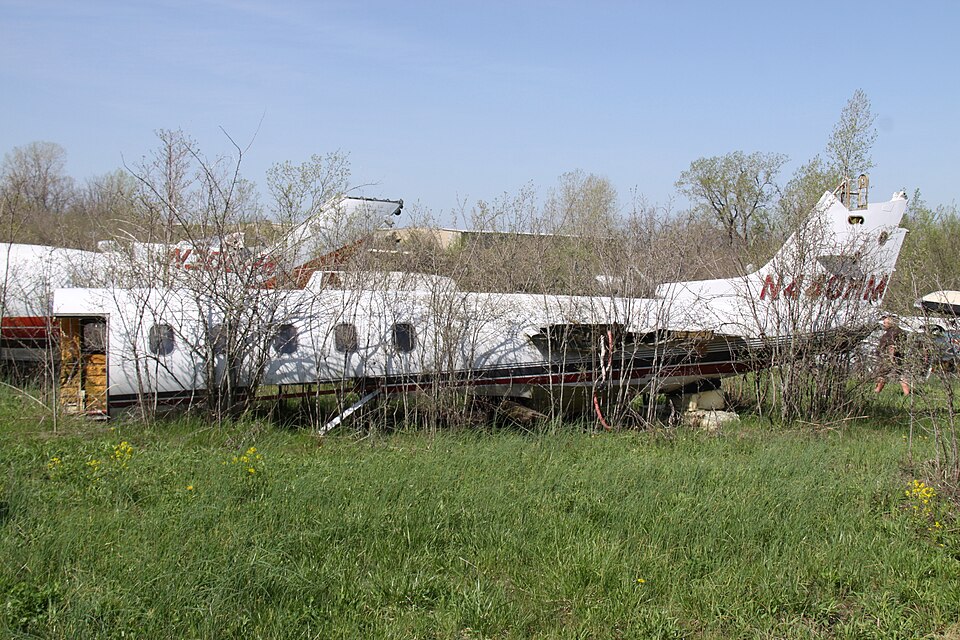
After touchdown, the pilot applied spoilers, brakes, and full reverse thrust. However, no braking effect was achieved due to hydroplaning. The aircraft continued off the end of the runway, skidded through approximately 200 feet of sod, vaulted over a 25-foot embankment, skidded across a road, and collided with a ditch.
Probable Cause
The official probable cause was determined to be the pilot-in-command's failure to achieve the proper touchdown point on a known wet runway, resulting in a subsequent overrun and on-ground collision with a ditch.