Background
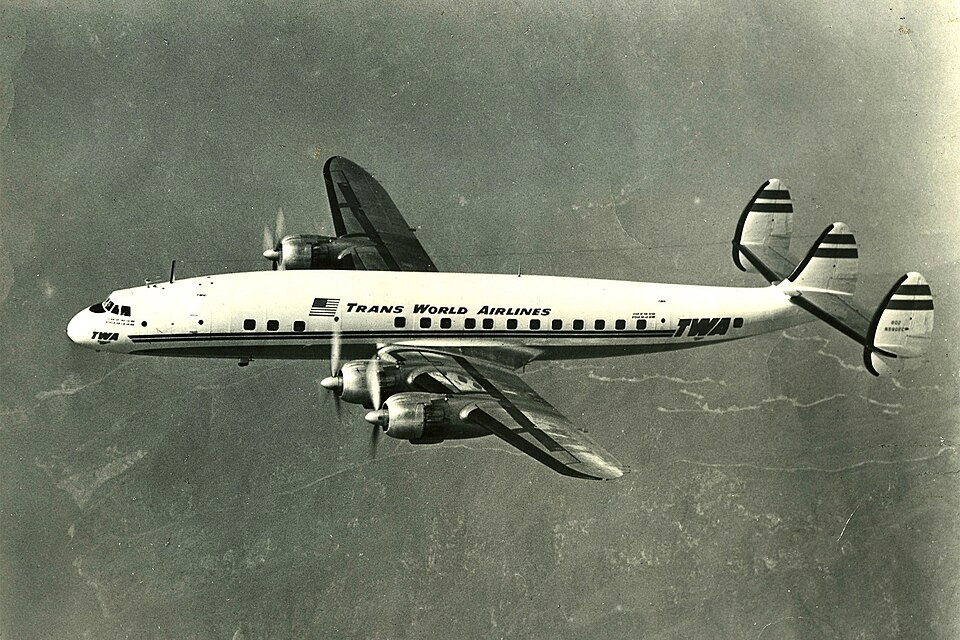
Trans World Airlines Flight 2 was a scheduled passenger service operating under instrument flight rules from Los Angeles International Airport to Kansas City, Missouri. The flight crew included Captain Jack S. Gandy, Copilot James H. Ritner, Flight Engineer Forrest D. Breyfogle, night Engineer Harry H. Allen (additional crew member), and hostesses Tracine E. Armbruster and Beth E. Davis. The United Air Lines flight involved was Flight 718.
Flight Details
Flight 2 departed runway 25 at 0901, delayed by minor maintenance. The aircraft carried 3,300 gallons of fuel, with a gross takeoff weight of 108,115 pounds, within limits. The flight plan proposed a cruising altitude of 19,000 feet at 270 knots. After takeoff, the flight was vectored through an overcast and switched to Los Angeles Center. The en route clearance specified the filed routing, with a climb to 19,000 feet in VFR conditions.
Communication and Altitude Requests
At 0921, TWA 2 reported approaching Daggett and requested a change to 21,000 feet. ARTC denied this due to traffic (United Flight 718). TWA 2 then requested a clearance of 1,000 feet on top, which was approved. The flight climbed to 21,000 feet and proceeded. At 0959, TWA 2 reported over Las Vegas, having passed Lake Mohave at 0955, at 1,000 on top at 21,000 feet, estimating arrival at the Painted Desert line of position at 1031. This was the last radio contact.
Collision
The collision occurred at approximately 1031 in visual flight rule weather conditions at about 21,000 feet. The impact was above a position 17 miles west of the TWA wreckage area, about 3.5 minutes flying time from the Painted Desert line of position. The two aircraft converged at an angle of about 25 degrees, with the DC-7 to the right of the L-1049. The DC-7 was rolled about 20 degrees right wing down and pitched about 10 degrees nose down relative to the L-1049.
Probable Cause
The Civil Aeronautics Board determined that the probable cause of the mid-air collision was that the pilots did not see each other in time to avoid the collision. Contributing factors considered included intervening clouds, cockpit visibility limitations, preoccupation with duties, possible distraction by providing a scenic view of the Grand Canyon, physiological limits to human vision, and insufficiency of en route air traffic advisory information due to inadequate facilities and personnel.