Incident Sequence
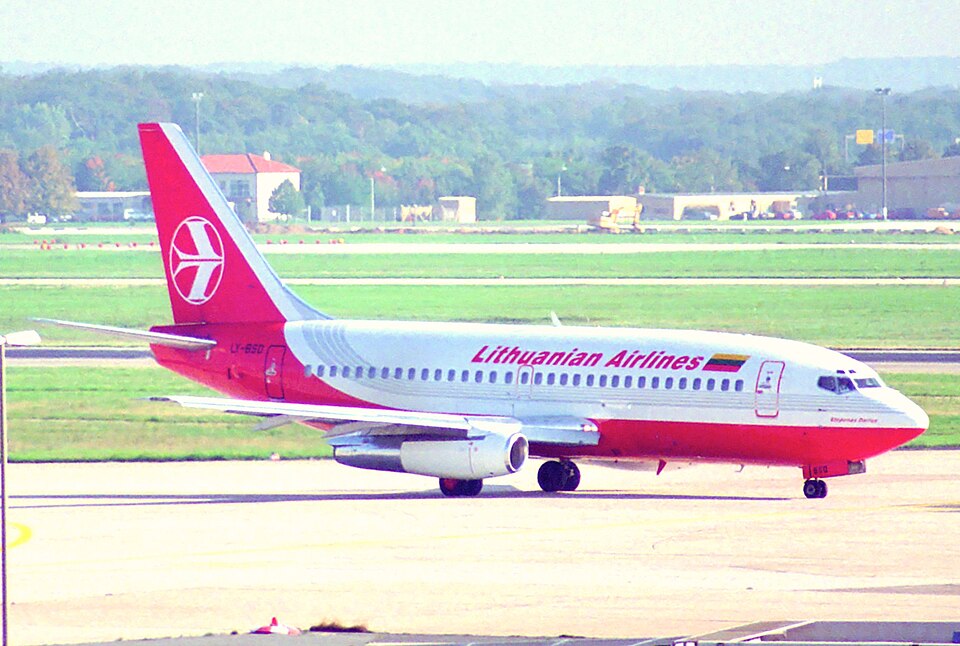
On 8 March 1999 at 05:43 local time, Boeing 737-200 registration LY-BSD departed Vilnius Airport on flight TE-352 to Istanbul. During climb to flight level 9600 m, the "SYST B N1 pump LOW PRESS" caution illuminated. The crew followed the Quick Reference Handbook (QRH) procedures. After 40 minutes of flight, the "SYST A N2 pump LOW PRESS" caution illuminated. Noting hydraulic fluid quantity near zero in system A and approximately 110-120 nautical miles from Vilnius, the crew decided to return. During the return, additional low pressure and low quantity cautions appeared for system B. The crew continued QRH actions and conducted an ILS approach, landing safely on runway 17 at 06:53. After stopping, all passengers deplaned via stairs, and the aircraft was towed to stand 17 at 07:15. The aircraft carried 51 passengers and 6 crew; no injuries were reported.
Investigation Findings
The commission inspected the aircraft and found hydraulic fluid sprayed in the main landing gear wheel well and on the lower fuselage. A cracked hydraulic tube P/N 65-44546-3655 in system B was identified, along with a hole in tube P/N 65-44546-3468. The pressure modular package P/N 65-17822-9 S/N 2952 had a deformed filter element and a damaged check valve housing (approximately 30% of the lower edge missing). The tube fractures were attributed to fatigue. Forensic examination at the Lithuanian Forensic Science Institute concluded that the incident was caused by failure of hydraulic systems A and B due to a fatigue crack in high-pressure tube P/N 65-44546-3655, leading to fluid loss and pressure drop.
Additional Deficiencies
The incident also revealed communication shortcomings. The Vilnius ACC shift supervisor received a report from Minsk ACC about the returning aircraft but did not follow the prescribed order of notification as per Vilnius Airport search and rescue instructions. Initial notification omitted aircraft type and operator information. Notifications reached fire services after 2 minutes 30 seconds, rescue services after 3 minutes, and the airline operations shift manager after 4 minutes. The danger phase "DETRESFA" was not declared as required by ICAO Annex 11.
Classification
The event was classified as a dangerous incident in accordance with Lithuanian aviation regulations.
Conclusion
The probable cause of the incident was a fatigue crack in high-pressure tube P/N 65-44546-3655, which caused loss of hydraulic fluid and failure of both hydraulic systems.