Introduction
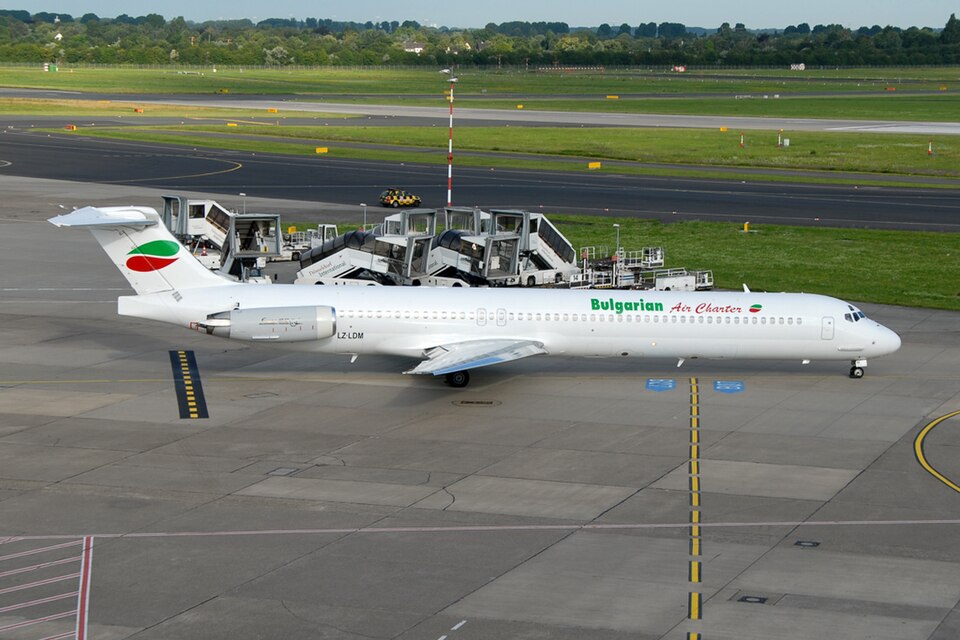
On July 16, 2018, at 07:35 UTC, a McDonnell Douglas MD-82 aircraft, registration LZ-LDM, operated by Bulgarian Aviation Charter, was involved in a serious accident during approach to Tarbes-Lourdes-Pyrénées Airport in France. The aircraft was performing charter flight BUC 8115 from Catania Airport (LICC), Italy, to the destination airport.
Flight Details
Flight BUC 8115 departed Catania at 05:12 UTC. The crew consisted of a captain, a first officer, and four cabin crew members. The captain conducted a pre-flight briefing according to the airline's standard operating procedures. The flight proceeded normally through takeoff, en route, and descent until reaching 380 feet above ground level (AGL) during the landing approach.
Event Sequence
At 380 feet AGL, the aircraft deviated from the descent profile. At a distance of 480 meters before the threshold of runway 20, the aircraft was at 46 feet AGL. The runway threshold was crossed at a height of 35 feet, slightly to the right of the centerline. Approximately 350 meters after the runway threshold, the captain initiated a go-around, but the engine thrust was not increased. The aircraft subsequently flew a total of 1,680 meters without increased engine thrust at heights of 46, 35, 33, 107, and 50 feet AGL respectively, with speed approaching a stall condition. After go-around thrust was applied, the aircraft recovered and continued to the alternate airport in Toulouse.
Investigation Findings
The safety investigation commission identified the cause of the serious accident as pilot errors in crew coordination and flight technique during the landing approach and go-around procedures in poor weather conditions at Tarbes-Lourdes-Pyrénées Airport. The weather at the time of the approach included rain, as indicated by the METAR report (METAR LFBT160400Z AUTO 28009KT 9999-RA). The aircraft was operated under Instrument Flight Rules.
Aircraft and Crew Information
The MD-82, registration LZ-LDM, was owned by Bulgarian Aviation Charter. The pilot in command and first officer held valid licenses. The aircraft was equipped with flight recorders, including a Digital Flight Data Recorder. No other damages or injuries were mentioned in the available report sections.
Conclusion
The serious accident resulted from crew coordination mistakes and incorrect application of flight procedures during the approach and go-around in adverse weather. The aircraft landed safely at the alternate airport without further incident.