Introduction
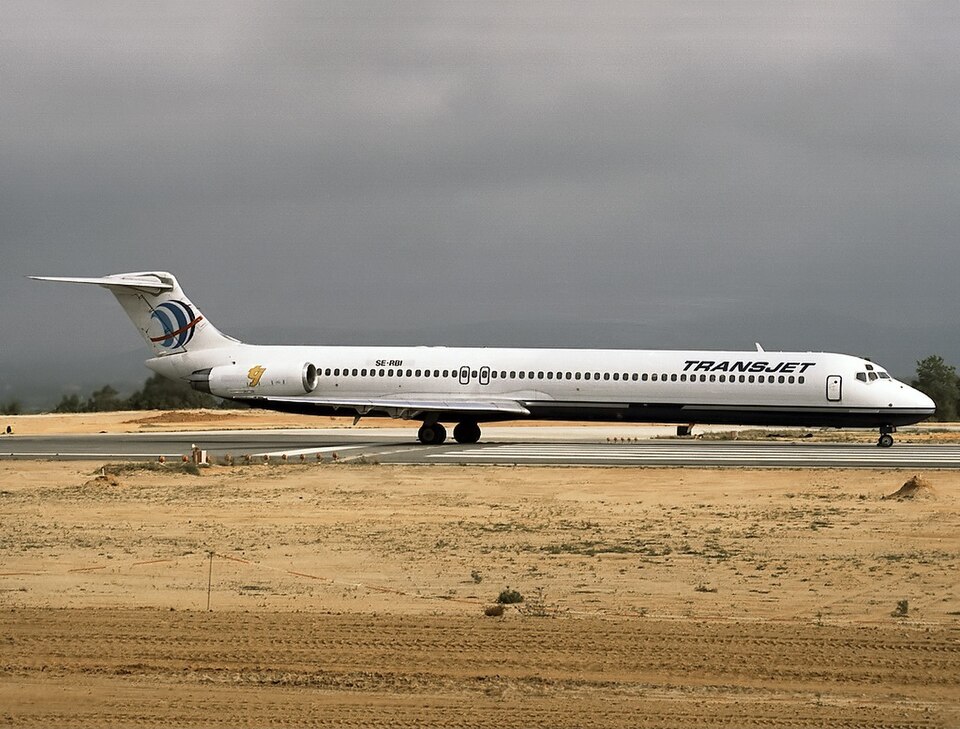
On 12 June 2001, at approximately 0836 hours UTC, an MD 83 aircraft, registration SE-RBI, was preparing for departure from Stand 216 at Manchester Airport. The aircraft was configured as a public transport passenger flight with 8 crew and 146 passengers on board. No injuries were reported among crew or passengers.
Sequence of Events
Upon arrival at the aircraft, the commander was informed by maintenance personnel that one of the two aircraft batteries was discharged for an unknown reason, preventing the Auxiliary Power Unit (APU) from starting due to low voltage. No ground power unit (GPU) was initially available. Eventually, a GPU was provided, and after sufficient battery charging, the APU was started and the GPU disconnected.
Later, during passenger boarding, the pilots detected an unidentified odour in the cockpit. Maintenance staff on the ramp alerted the pilots that smoke was emanating from the Electrical and Electronic (E&E) bay compartment door beneath the fuselage. The commander summoned the purser to the flight deck, informed him of the situation, turned off the battery switch, and shut down the APU.
Evacuation
Smoke began to fill the cockpit, and no electrical power was available to communicate with emergency services or ATC. The main cabin door was blocked by disabled passengers still boarding, and the emergency slides had not yet been armed. Only emergency lighting, powered by separate dedicated batteries, was available. A precautionary evacuation of passengers was initiated via the rear ventral door using a loud hailer. All passengers and crew vacated the aircraft without injury.
Investigation Findings
The smoke was discovered to have been due to boiling of the batteries, possibly due to their rapid re-charging.