Incident Overview
On a daylight instrument meteorological conditions (IMC) approach, an aircraft encountered freezing rain, mist, and ice pellets, with temperatures near freezing. During the descent and vectors for the approach, moderate clear ice began to accumulate on the airframe. A master warning light in the cockpit illuminated, indicating that the horizontal stabilizer heat had failed.
Approach and Icing
The crew configured the aircraft at 120 knots with 10 degrees of flaps, following the abnormal procedures checklist from the flight manual. However, they did not activate the horizontal stabilizer deice backup system. The approach continued with the icing condition present.
Landing and Overrun
The aircraft touched down approximately 1,500 feet beyond the runway threshold. The runway surface was contaminated with slush. For the next 3,000 feet, there was no braking action or antiskid capability. The total runway length was 7,753 feet, leaving 3,253 feet for stopping after the initial touchdown point. The required landing distance for a dry runway was 3,445 feet, meaning the remaining runway was 192 feet short.
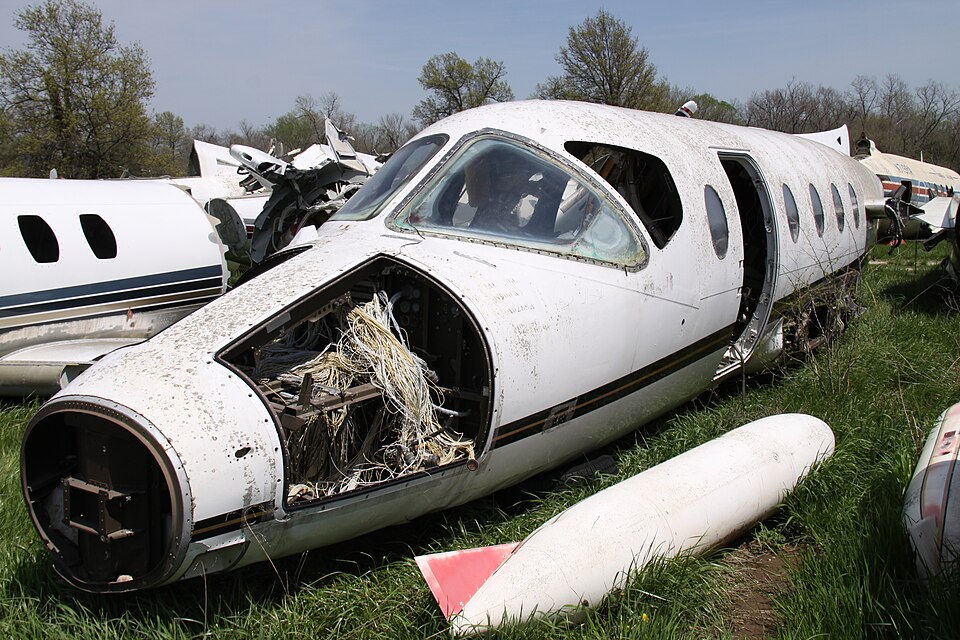
Seeing a downhill embankment and support poles beyond the runway end, the captain deliberately forced the aircraft to depart the right side of the runway to avoid the poles. As the aircraft descended the embankment, the nose landing gear collapsed, and the aircraft came to a stop.
Probable Cause
The official finding stated: "The diminished effectiveness of the anti-skid brake system due to the slush contaminated runway. Factors were the freezing rain encountered during the approach, coupled with a failure of the horizontal stabilizer heat."