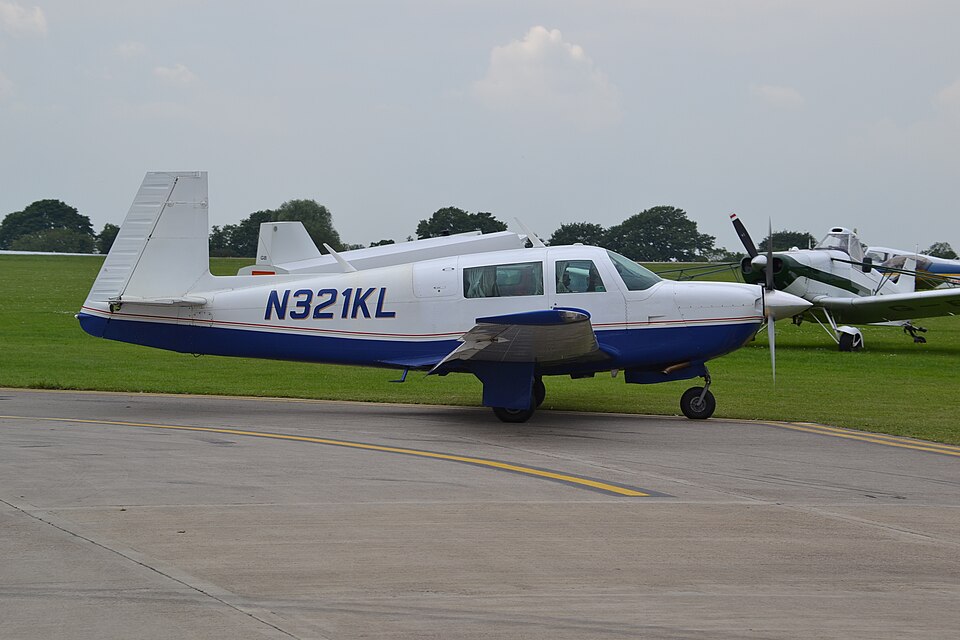
Accident Details
On 28 December 2009 at 1500 UTC, a Mooney 201 M20J, registration N321KL, experienced a loss of engine power during takeoff from Stapleford Aerodrome in Essex, United Kingdom. The flight was a private operation conducted by the sole occupant, a 46-year-old male pilot holding a Private Pilot's Licence (PPL) with 351 total flying hours, including 10 hours on type.
Pre-flight Inspection
During the pre-flight inspection, the pilot found a small amount of water in a fuel sample taken from the left fuel tank. He drained two additional samples until he judged the fuel to be clear of water. No water was evident in the sample taken from the right fuel tank. The engine was started with the right tank selected, then switched to the left tank prior to taxi.
History of the Flight
After a normal engine warm-up and power checks, the aircraft lined up for takeoff on Runway 22L. The takeoff appeared normal, and the landing gear was retracted. At a height of approximately 50 ft, the engine suddenly lost power. The stall warning activated, and the pilot pitched the nose down. During this maneuver, the engine surged briefly before losing power again. The pilot closed the throttle and decided to land back on the runway, but did not have enough time to extend the landing gear. The aircraft touched down on the adjacent grass Runway 22R and slid for about 100 meters before stopping, with 170 meters of runway remaining. The pilot, uninjured, vacated the aircraft through the cabin door. The aircraft sustained damage to the propeller, underside-mounted aerials, and abrasions to the lower fuselage.
Post-accident Examination
After the accident, the aircraft was recovered to a maintenance organization. The left fuel tank filler cap was found to be incorrectly fitted. The pilot stated that he had visually checked the left fuel tank quantity shortly after the accident but could not recall whether he found the cap loose or if he had replaced it correctly. Both fuel tanks were drained and examined: the left tank contained about 50 liters of fuel and approximately 500 ml of water. Water was also found throughout the fuel system, up to the fuel injectors. A very small amount of water was recovered from the right fuel tank. The aircraft had been parked outside for about three weeks prior to the accident, during which the weather included snow and rain.
Pilot's Comments
The pilot noted that several weeks before the accident, the aircraft had been flown to Thurrock Aerodrome for its annual inspection and partial repainting, including the area around the left fuel tank filler port. The aircraft was then parked outside for about ten days. On 4 December 2009, the pilot relocated the aircraft to Stapleford. The left fuel tank was visually confirmed as empty, and 50 liters of fuel were added. The pilot recalled performing a water drain check on both tanks with no evidence of water, and the flight to Stapleford was conducted on the right tank. The aircraft remained parked outside until the accident flight. The AAIB and CAA databases recorded four prior events between 1984 and 2002 involving water contamination of fuel tanks on this aircraft type.