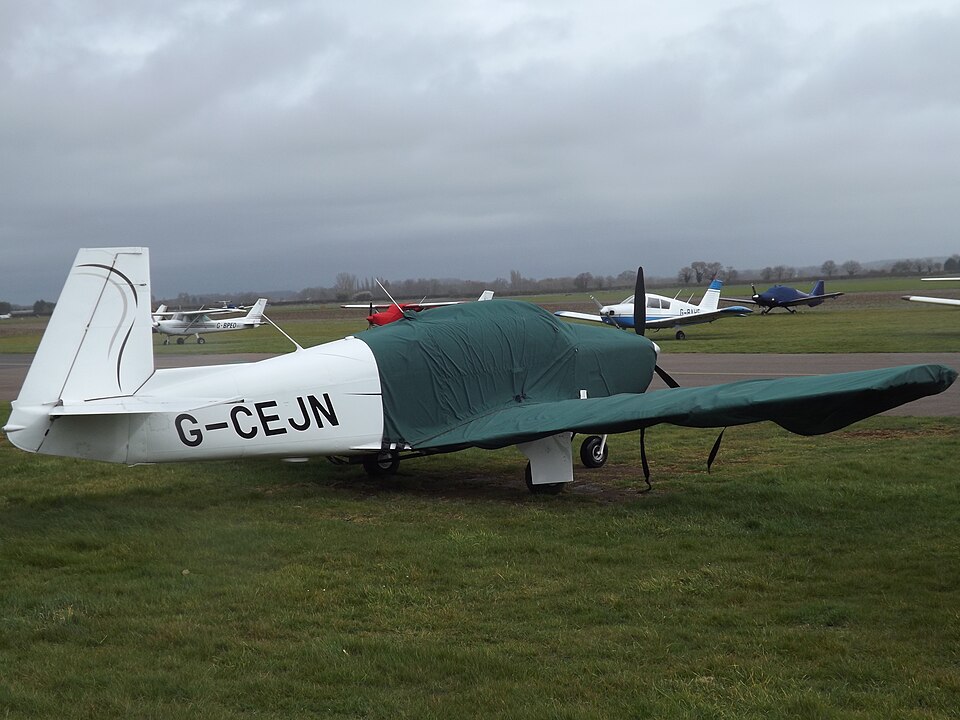
Incident Overview
On 8 August 2009, a Mooney M20F Executive (registration G-CEJN) operated by a private pilot experienced a collapse of all three landing gears after landing at Wellesbourne Mountford Airfield, Warwickshire. The pilot was uninjured. The aircraft sustained damage to the engine cowling, cowl flaps, propeller, nose landing gear, lower fuselage, wing, and the engine was shock-loaded.
History of the Flight
The flight was a local VFR test to verify the landing gear system following replacement and adjustment of a landing gear limit switch by a maintenance organisation. After departure, the pilot cycled the landing gear three times at 3,000 ft and 95 kt, with all indications satisfactory. He then returned to the departure airfield. On final approach to Runway 18, the pilot confirmed the green down-and-locked light and the visual landing gear position indicator showed extended. A normal flare and touchdown were followed by lowering the nosewheel. After one to two seconds, the propeller struck the runway, stopping the engine. The pilot noted that neither the green down-and-locked nor the amber in-transit lights were illuminated. The aircraft slid on its lower fuselage about 100 metres, then swung 90° left and came to rest. The pilot switched off the master switch and evacuated.
Engineering Examination
Airfield staff found all three landing gears collapsed, with the aircraft supported on the propeller and lower rear fuselage. The cockpit selector was in the down position. When lifted, the gears partially extended under gravity. Manual gear extension was ineffective, but after applying sustained force, the gears extended and the aircraft was towed.
The aircraft's landing gear downlock is fitted only to the nose landing gear; the main gears rely on rods connected to the nose gear downlock. Examination revealed that the nose landing gear downlock retraction link (part number 530003-013) was fitted upside down and lacked both grease nipples in their threaded holes. The link appears symmetrical but has a profile difference requiring correct orientation. The maintenance and parts manuals provided no guidance on correct orientation, and there were no diagrams showing grease nipples. After correctly fitting the link, the downlock engaged fully.
The aircraft had previously been involved in a landing gear collapse in France in 2001. Extensive repairs were carried out, and the aircraft was placed on the UK register in 2007. Four days before this accident, the landing gear failed to extend electrically; the down-limit microswitch was replaced and adjusted. The system performed satisfactorily in static tests. The aircraft had flown 51 hours since the major repair.
Probable Cause
The nose landing gear downlock retraction link had been installed upside down, preventing the downlock mechanism from reaching a full over-centre position and resulting in a soft downlock. The maintenance and parts manuals did not provide guidance on the correct orientation of the retraction link.