History of Flight
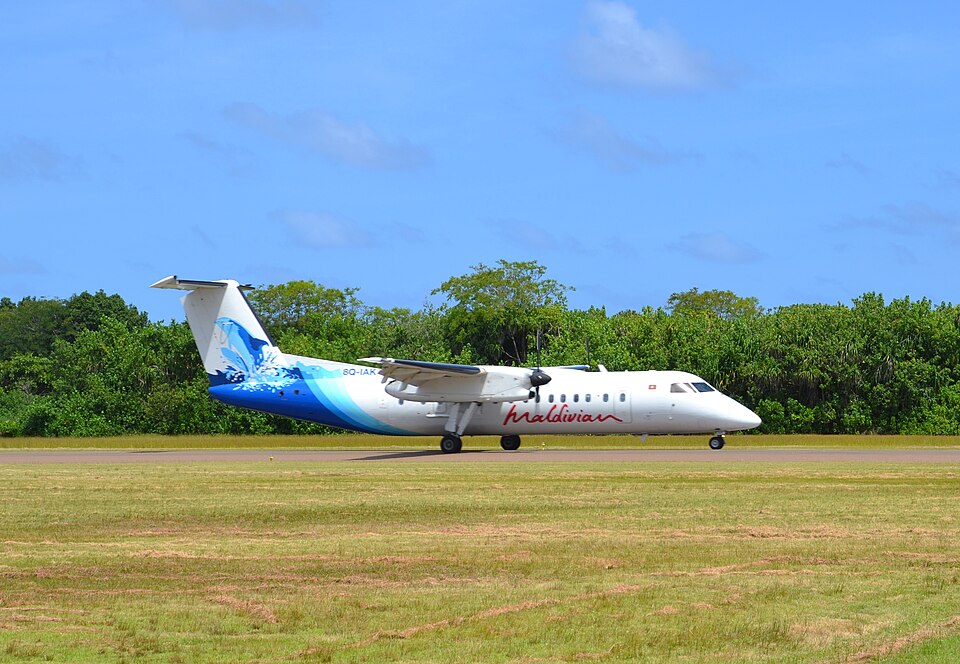
On 5 May 2022, a Bombardier DHC-8-300 aircraft with registration 8Q-IAK, operated by Island Aviation Services, departed Kooddoo Airport on a scheduled passenger service to Kadhdhoo Airport. The flight carried 39 passengers, two cockpit crew members, and two cabin crew members. The pilot-in-command acted as pilot flying, while the first officer served as pilot monitoring.
The aircraft had earlier completed sectors from Velana International Airport. Prior to departure from Kooddoo, the crew completed the pre-departure checklist. En route to Kadhdhoo, the aircraft deviated east due to adverse weather. The flight was uneventful until the first approach to Kadhdhoo.
First Approach and Go-Around
Although the active runway at Kadhdhoo was Runway 21, the crew requested to land on Runway 03 after receiving information on surface conditions from air traffic control. The request was approved, and the crew commenced an approach. However, shortly before touchdown, they initiated a go-around due to mechanical turbulence and gusting wind conditions.
Second Approach and Runway Excursion
On the second approach, the crew opted to land on Runway 21. Air traffic control reported the wind as 280 degrees at 15 knots. The crew completed the landing checklist and requested PAPI. No runway surface condition report was provided by ATC for this approach.
The aircraft touched down approximately 442 meters before the end of Runway 21. It overran the runway and came to rest on grass about 35 meters (115 feet) beyond the runway end. Both engines were shut down after the aircraft stopped.
Injuries and Damage
According to the investigation report, there were no reports of injuries to any occupants, and the aircraft sustained no damage.
Investigation
The incident occurred at 19:47 hours local time. The Maldives Civil Aviation Authority reported the event to the Accident Investigation Coordinating Committee, and an investigation was initiated the same night.