Introduction
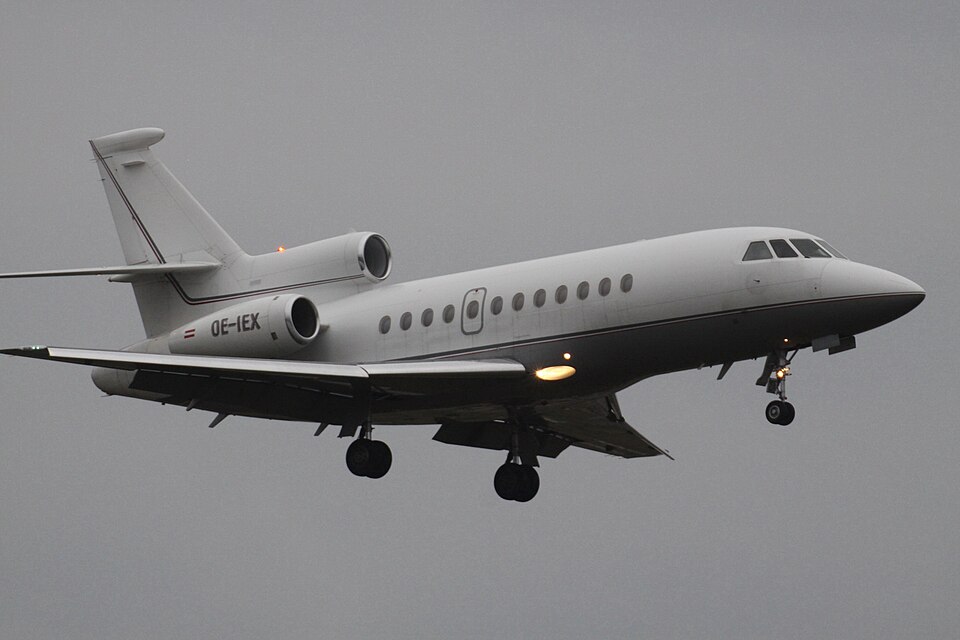
On 6 November 2010, at 16:18 UTC, a Dassault Falcon 900EX, registration OE-IEX, was involved in an accident at Naples Capodichino Airport (ICAO: LIRN). The aircraft, operated by International Jet Management GmbH, was scheduled for a passenger flight to Nice. At the time, only the copilot and a flight attendant were on board; the commander was handling administrative tasks in the terminal.
Sequence of Events
The aircraft was parked at stand 41. A service vehicle, a Fiat Panda belonging to a ground handling company, was proceeding to stand 42 for the departure of an airliner parked there. Instead of following the prescribed one-way route, the vehicle took a two-way road between stands 15 and 16, crossed a taxiway, entered stand 41, and collided with the right wing tip of the Falcon 900EX. The vehicle driver sustained facial trauma with fractures and head wounds. The copilot and flight attendant, alerted by the impact, went to assist the driver. An airport ambulance arrived at 16:25 UTC and transported the driver to a hospital.
Damage
The aircraft suffered damage to the aileron and right wing tip. The vehicle sustained extensive damage.
Contributing Factors
The investigation noted that no tire marks were found on the asphalt, suggesting no braking attempt. The driver stated he regained consciousness only in the hospital and learned the details from others. The lack of daylight (the event occurred near sunset) may have reduced visibility. Additionally, the aircraft had not yet been electrically powered, so its lights were off. It could not be ruled out that the driver was distracted by activity at stand 42, where departure operations were ongoing. No alcohol or toxicological tests were performed on the driver.
Probable Cause
The accident was attributed to human factors. Specifically, the vehicle did not follow airport traffic regulations and crossed stand 41 without necessary caution, colliding with the parked aircraft. The lack of daylight may have contributed.