What happened
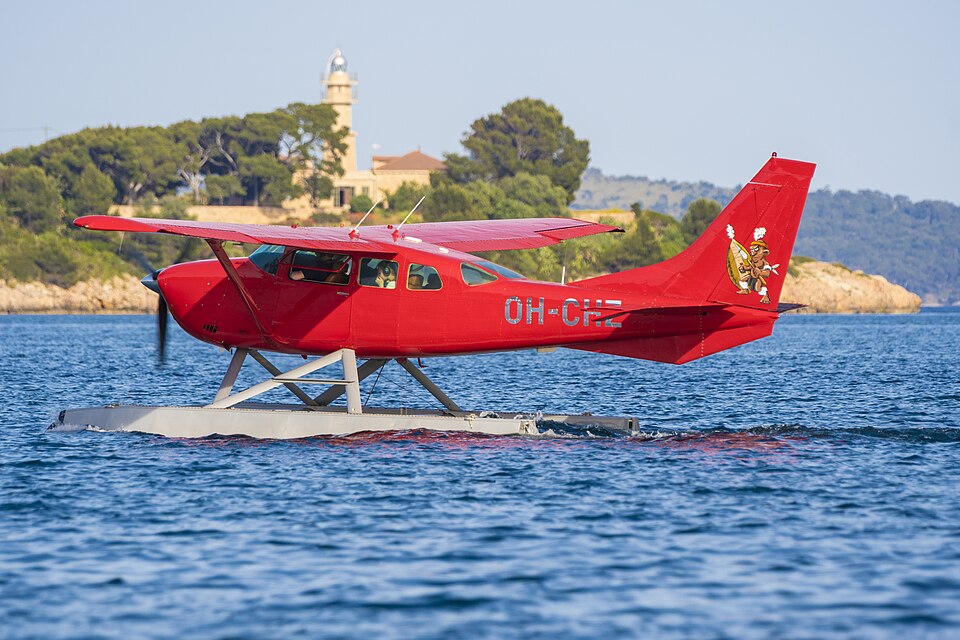
On March 2, 2021, a Cessna TU206G seaplane, registration OH-CHZ, departed from Joensuu Airport for a flight to Kauhavo. During the takeoff roll, the pilot experienced a sudden impact from the right side, followed by a nose-down pitch and heavy controls. The pilot immediately increased engine power to stabilize the aircraft and decided to return to the airport.
During the climb, the storage compartment door of the right float detached and struck the right side of the horizontal stabilizer's leading edge, causing structural damage. As the aircraft maneuvered to land, the storage compartment door of the left float also detached, falling into a nearby forested area. The aircraft landed safely back at Joensuu Airport.
The investigation
The investigation examined the maintenance history and the pre-flight inspection process. The aircraft had been stored at a local maintenance facility since October 2020 while awaiting a maintenance agreement. During its time at the facility, technicians had opened the float inspection and storage compartments to facilitate moisture removal. When the aircraft was prepared for pickup, the doors were closed but not secured.
Investigators also reviewed the pilot's pre-flight inspection. The pilot performed a standard external walk-around but did not notice that the compartment doors were unlocked. It was noted that the locking mechanism, which uses spring-loaded screws, makes it difficult to visually distinguish between the locked and unlocked positions because the screws do not protrude significantly when closed.
Findings
- The maintenance facility closed the compartment doors without engaging the locks after the aircraft was prepared for retrieval.
- The lack of a formal maintenance agreement left the responsibilities regarding the aircraft's handling and documentation unclear.
- The locking mechanism on the float compartments lacks clear visual indicators to show whether the doors are properly secured.
- The pilot's pre-flight inspection was unable to detect the unsecured doors due to the subtle nature of the locking position.