Casualties unknown

2008-02-20: Beech 95-55 Baron (F-BPJF) — Périgny, FR

Périgny, FR

On February 20, 2008, a Beech 95-55 Baron (registration F-BPJF) was involved in an aviation accident near Périgny, FR. Investigators recorded the probable cause as: The accident was caused by fuel exhaustion following improper fuel management, specifically the pilot's failure to monitor the main fuel tanks by leaving the gauges set to the auxiliary tanks. This summary draws on records from the French Bureau d'Enquêtes et d'Analyses (BEA).
Sourcesthe French Bureau d'Enquêtes et d'Analyses (BEA)Primary reportUpdated 1785058346Data APIEditorial standards
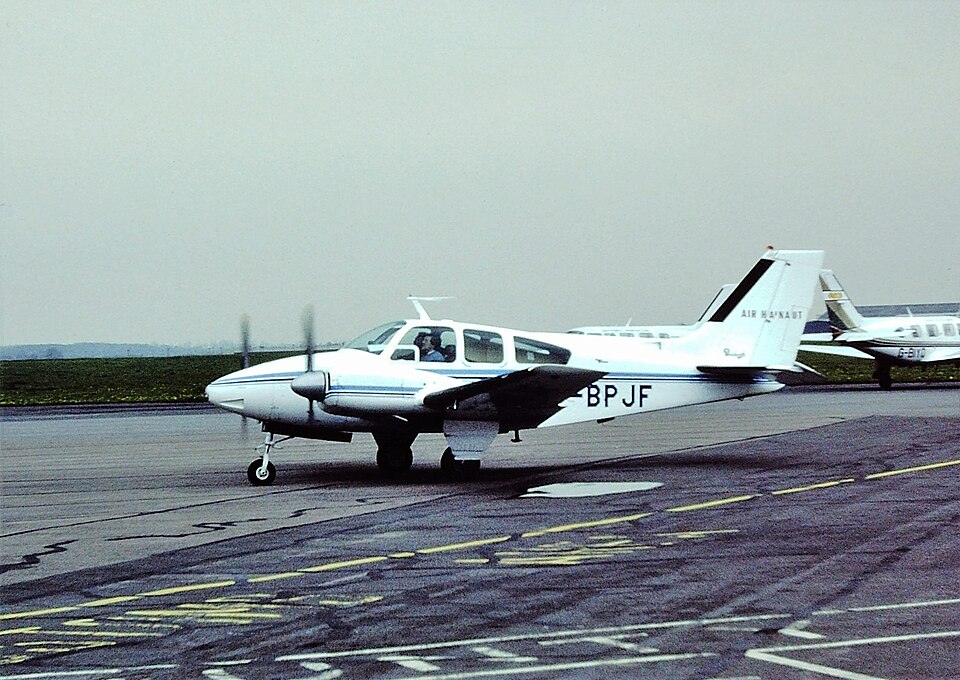
Aircraft registered F-BPJF
Aircraft registered F-BPJF. Photo: Rob Hodgkins / CC BY-SA 2.0, via Wikimedia Commons

A Beechcraft 95-55 Baron crashed in a forest near Périgny after both engines failed due to fuel exhaustion during a night IFR flight.

What happened

On the evening of February 20, 2008, a Beechcraft 95-55 Baron, registration F-BPJF, was conducting an IFR flight from Bourg-en-Bresse toward Toussus-le-Noble. During the flight, the pilot experienced initial radio communication difficulties but eventually established contact with air traffic control.

While descending at flight level 80, the pilot reported an engine problem. Shortly thereafter, the aircraft suffered a dual engine failure, with the engines stopping approximately two minutes apart. The pilot declared an emergency and expressed intentions to land at Auxerre aerodrome. However, during the descent, the aircraft's GPS also ceased to function. The aircraft eventually struck trees in a forest near Périgny, resulting in the destruction of the aircraft and one fatality (the pilot). The passenger sustained serious injuries.

The investigation

The investigation focused on the fuel management system and the pilot's recent flight experience. Investigators examined the fuel selectors, which were found in the 'MAIN' position, and the fuel quantity gauges, which were set to the 'AUX' (auxiliary) position. Analysis of the fuel levels at the previous stop in Bourg-en-Bresse revealed that while the auxiliary tanks had been replenished, the main tanks contained very low levels of usable fuel.

Investigators also reviewed the pilot's credentials, noting that while highly qualified in other areas, this was his first night flight in IMC (Instrument Meteorological Conditions) using a multi-engine aircraft of this type. The wreckage examination confirmed that the engines failed due to a lack of fuel supply.

Findings

  • The primary cause of the accident was inappropriate fuel management.
  • The pilot failed to switch the fuel quantity gauges from the auxiliary tanks to the main tanks, which prevented him from recognizing that the main tanks were nearly empty.
  • The aircraft lacked an audible low-fuel warning alarm to assist the pilot.
  • The high workload of managing a dual engine failure at night in poor weather conditions contributed to the loss of control.
  • The pilot's limited experience with night IFR operations in a multi-engine aircraft reduced his ability to manage the emergency effectively.

Probable cause

The accident was caused by fuel exhaustion following improper fuel management, specifically the pilot's failure to monitor the main fuel tanks by leaving the gauges set to the auxiliary tanks.