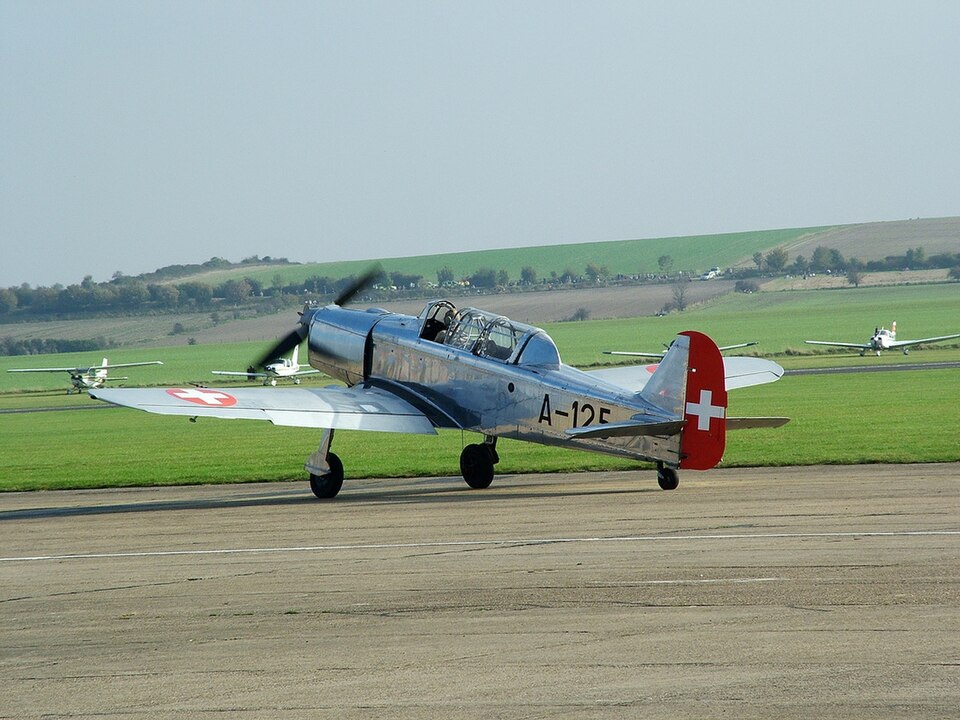
History of the Flight
The aircraft departed from RAF Waddington for a planned flight to Spanhoe Airfield. After climbing to 2,000 ft, cruise power was set, and engine temperatures and pressures indicated normal values. Approximately five minutes later, a slight vibration developed into heavy vibration, and oil was observed running from the right side of the engine cowling onto the windscreen. The pilot reduced power and lowered the landing gear. At about 800 ft above ground level, the engine stopped. The flaps were lowered, and a slight left turn was made to avoid uneven ground and power lines. The aircraft landed heavily in a slightly nose-down attitude, and the landing gear collapsed.
Injuries and Damage
The pilot and passenger sustained minor injuries but were able to exit the aircraft without assistance. The aircraft sustained substantial damage: the landing gear was severely damaged, and the propeller and underside of the aircraft were less damaged.
Aircraft and Engine Details
The Pilatus P2-05, registration G-BLKZ, is a tandem two-seat, tailwheel-configured, low-wing all-metal aircraft designed as an advanced military trainer in the 1940s. It is equipped with one Argus AS 410-A2 piston engine, a supercharged inverted V12 producing around 465 horsepower. The aircraft was constructed in 1948.
The engine was rebuilt in 2001 and had flown approximately 367 hours prior to the accident. Upgraded pistons, manufactured from a revised specification alloy introduced to avoid corrosion-induced cracking problems on low-utilisation engines, were fitted 49 flying hours and 85 flights before the accident. The aircraft had flown aerobatics and carried out a series of manoeuvres as part of a flight test for a magazine article shortly before the engine failure.
Engine Examination
Initial visual inspection by the pilot revealed a golf-ball-sized hole in the crankcase in the vicinity of No 3 cylinder. The missing crankcase parts were found in the bottom of the engine cowling. A subsequent preliminary investigation by a maintenance organisation experienced with this type of engine found that both connecting rods were broken on the third bank of cylinders from the front. The first appeared to have failed at the gudgeon pin, and this failure in turn destroyed the second. Both pistons were free to move in their respective cylinders. There was no sign of blueing on the crankshaft, although some blueing had been caused by the flailing rods hitting the cylinder skirts and crankcase wall, indicating that the bearing lubrication system had been functioning normally.
Maintenance Organisation Comments
The maintenance organisation commented that this engine had failed in a similar fashion to many other Argus engines they had seen. They reported that the Argus engine is not a 'strong' engine and has a history of connecting rod and piston failures. They stated that, like many other engines of this era, the Argus engine requires delicate handling and smooth power changes.