Accident Summary
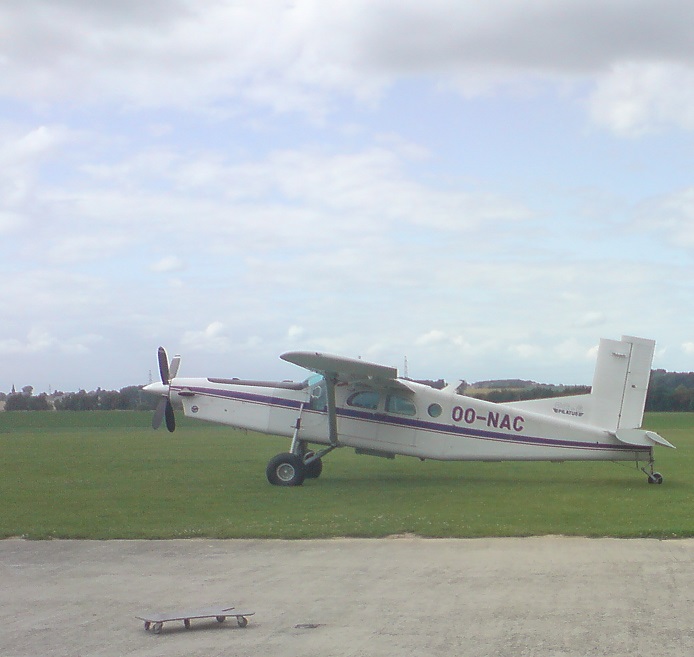
On 19 October 2013, a Pilatus Porter aircraft crashed in a field near Gelbressée, Belgium, while conducting parachute drop operations. The aircraft was destroyed by impact and post-crash fire. All occupants died; four parachutists were ejected from the aircraft just prior to impact. A large portion of the left wing and parts of the cabin were found approximately 2 km from the main wreckage.
Sequence of Events
The aircraft had been performing multiple parachute flights that day. The last takeoff occurred at 13:20 from airfield EBNM, carrying 10 parachutists. At 13:28, the aircraft appeared on radar at 1,200 ft. An air traffic control officer at EBCI instructed the pilot to maintain 2,000 ft to allow a crossing B737 to land. After the crossing, the Pilatus was cleared to climb to 5,000 ft. At 13:33:32, while at 4,400 ft, the pilot was authorized to turn back toward the drop zone and initiated a turn toward EBNM.
Witness Accounts
Multiple witnesses observed the aircraft. One witness heard an abnormal engine noise, compared to a rally car decelerating, followed by a loud explosion and the aircraft diving. Another witness, driving on the E42 highway, saw what appeared to be aerobatic maneuvers, including diving and spinning, and then observed the wing break up. A sailplane pilot in a nearby garden heard the engine sound change and saw the aircraft diving at more than 45°, followed by a sharp pull-up exceeding 70°, then the upward breaking of a wing. He heard the propeller pitch change after wing separation. Another witness saw the aircraft flying horizontally with significant left and right roll movements before it disappeared from view.
Probable Cause
The official investigation determined that the cause of the accident is a structural failure of the left wing due to a significant negative g aerodynamic overload, leading to an uncontrollable aeroplane and subsequent crash. The most probable cause of the wing failure is the result of a manoeuvre intended by the pilot, not properly conducted and ending with an involuntary negative g manoeuvre, exceeding the operating limitations of the aeroplane. Contributing safety factors include: weakness of monitoring of operations by the operator; lack of organizational structure between operator and parachute club; performance of aerobatics with an aircraft not certified for such maneuvers; pilot not adequately qualified or trained for aerobatics; transportation of unrestrained passengers; weak legal framework for aerial work; lack of effective oversight by the Belgian Civil Aviation Authority (BCAA); lack of mandatory flight data recorders; insufficient back protection for the pilot; difficulty determining weight and balance; overlapping authorizations; possible misinterpretation of maintenance manual; unreported violations; peer pressure encouraging unapproved maneuvers; and flying at high altitude without oxygen.