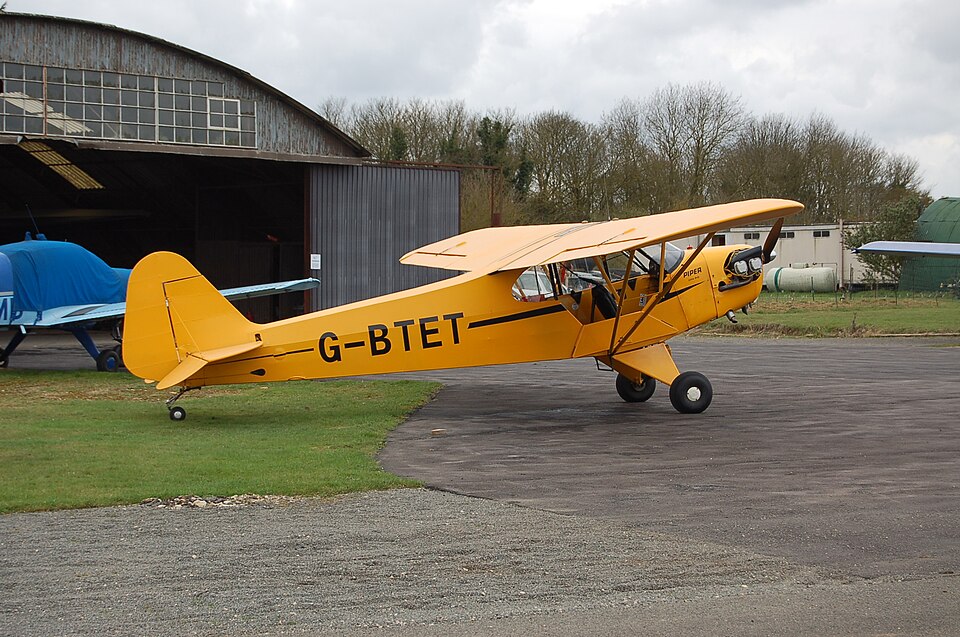
Accident Details
On 31 August 2013 at 0900 UTC, a Piper J3C-65 Cub, registration G-BTET, operated by a private pilot, experienced a loss of engine power during the final approach to Enstone Airfield, Oxfordshire. The aircraft was manufactured in 1946 (serial number 18296) and powered by a single Continental Motors Corp A65-8 piston engine.
Sequence of Events
During final approach, the pilot noticed that the aircraft was descending below the normal approach path and that the engine was not producing the expected power. The engine did not respond to throttle movements, and the descent continued. The aircraft subsequently struck a signal post located just outside the airfield perimeter fence and came to rest within the airfield boundary. The pilot, the sole occupant, sustained minor injuries and left the aircraft unaided.
Previous Incidents
Several other pilots who had flown the same aircraft reported similar low power events, which had been attributed to carburettor icing. The pilot of this incident also attributed the power loss to carburettor ice formation during the later stages of the flight.
Weather Conditions
The weather conditions at the time of the incident were conducive to the formation of carburettor icing at cruise or descent power settings.
Damage
The accident resulted in damage to the landing gear, fuselage, propeller, and engine.
Pilot Information
The commander held a Private Pilot’s Licence, was 66 years old, and had accumulated 270 total flying hours, with 24 hours on type. In the 90 days prior to the accident, he flew 13 hours; in the 28 days prior, he flew 1 hour.