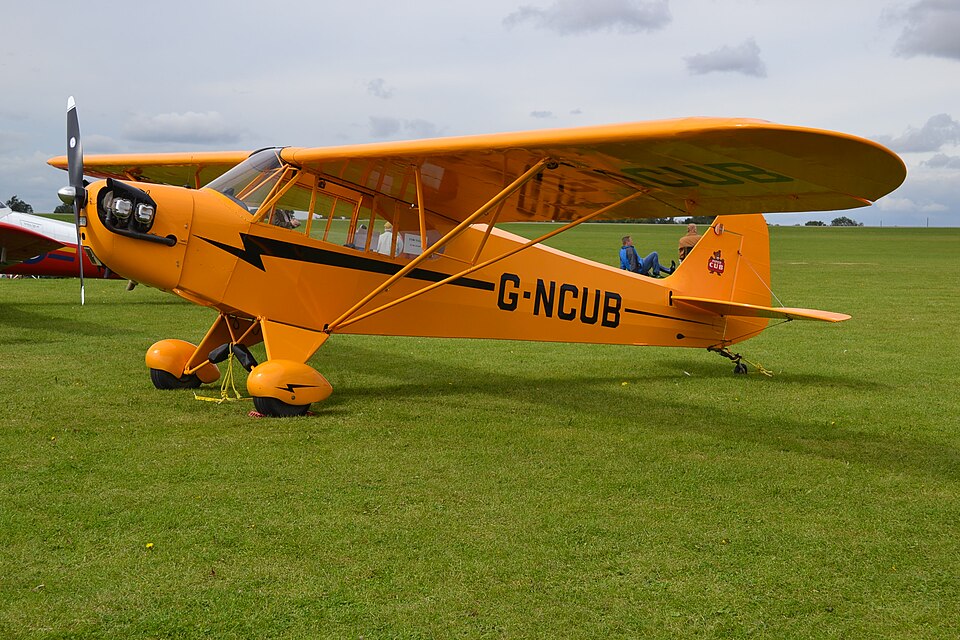
Accident Details
On 8 October 2009 at 1430 hours, a Piper J3C-65 Cub, registration G-NCUB, was involved in an accident 4 miles northwest of Ledbury, Herefordshire. The aircraft was on a private flight with one pilot and no passengers. The pilot held a Private Pilot’s Licence and was 61 years old with 164 hours of flying experience. The aircraft, manufactured in 1944, was powered by a single Continental Motors Corp C85-12F piston engine.
Flight Sequence
After conducting a practice landing at a farm strip, the pilot initiated a climb. At approximately 800 ft, the engine experienced a partial loss of power. The pilot immediately selected carburettor heat, but there was no apparent response from the engine. Consequently, the pilot decided to perform a forced landing. She selected a field but, at the last moment, deemed it too small and extended the glide to another field. The aircraft landed heavily, damaging the propeller and landing gear beyond economic repair. The pilot sustained no injuries.
Meteorological Conditions
A meteorological aftercast for the Ledbury area on 8 October, obtained from the Met Office, provided air temperature, dew point, and humidity from the surface to 920 ft. When these values were plotted on the Civil Aviation Authority’s Carburettor Icing Prediction Chart (published in Safety Sense Leaflet No 14), the prognosis indicated that serious carburettor icing could occur at any power setting between the surface and 920 ft above sea level.