Event Overview
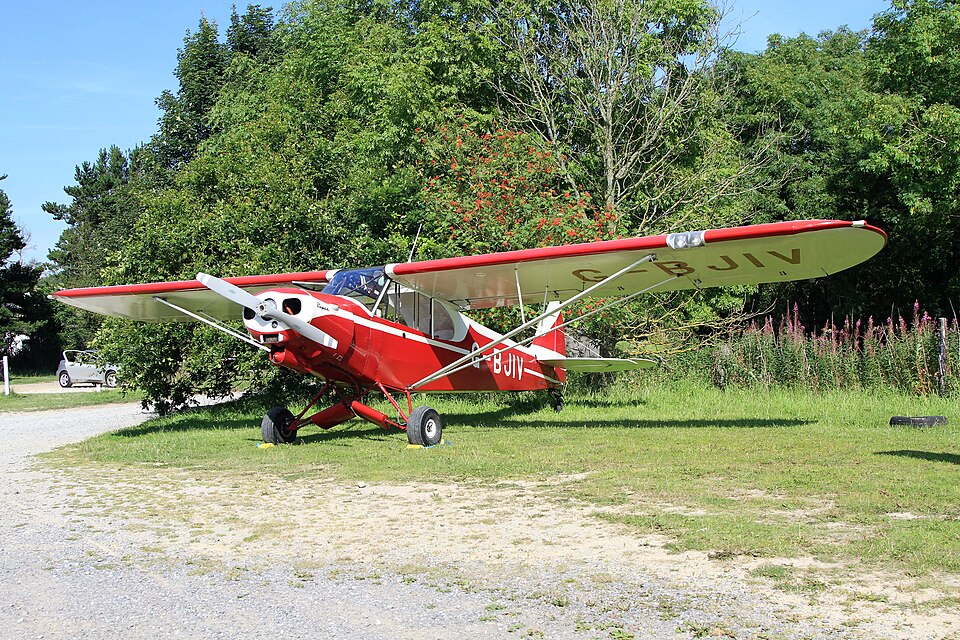
On 30 August 2011, at 0950 UTC, a Piper PA-18-150 (Modified) Super Cub, registration G-BJIV, was operating as a glider tug at the Yorkshire Gliding Club, Sutton Bank, North Yorkshire. The sole occupant, the pilot, held a National Private Pilot’s Licence and had 934 hours of flying experience, including 400 hours on type. The flight was private.
Accident Sequence
During the takeoff run for an aero-tow, a failure occurred within the right landing gear. This caused the right wingtip to contact the ground. In response, the pilot released the tow and shut down the engine to avoid damage to the propeller. The aircraft then turned through approximately 270° to the right before coming to rest. No further damage was sustained.
Findings
Examination revealed that a steel bracket, which reacts the right gear bungee loads, had developed a concealed crack. This crack caused the bracket to fail, thereby unloading the bungee and allowing the wheel attachment to migrate upwards. On this aircraft type, each main landing gear is equipped with a cable to carry normal suspension loads should a bungee failure occur. On this occasion, the cable on the right gear unit functioned as designed and was able to carry the support loads following the bracket failure. This limited the wheel travel and prevented extensive damage to the aircraft, but did not prevent the wingtip from contacting the ground.
Damage and Injuries
The aircraft sustained a fractured landing gear bracket. The pilot reported no injuries.
Conclusion
The investigation determined that a concealed crack in the steel bracket reacting the right gear bungee loads led to its failure, causing the wheel attachment to migrate upwards and the wingtip to contact the ground.