Introduction
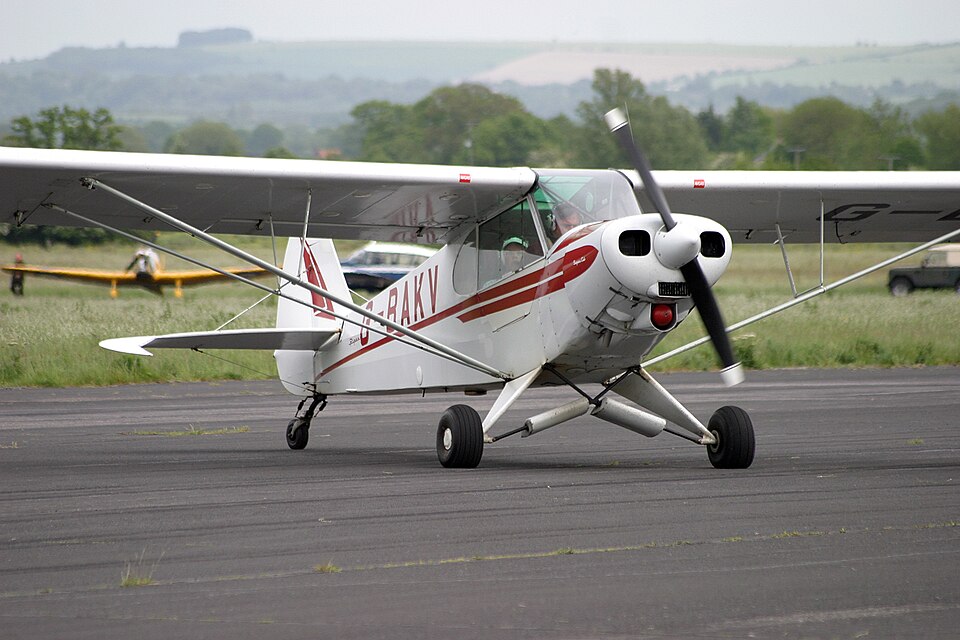
On 6 September 2006 at 0930 hours UTC, a Piper PA-18-150 Super Cub, registration G-BAKV, was involved in an accident at Thruxton Airfield, Hampshire. The aircraft was manufactured in 1972 and powered by a single Lycoming O-320-A2B piston engine. The flight was conducted under a National Private Pilot’s Licence (NPPL) by a 46-year-old pilot with 300 hours total flying experience, including 5 hours on type. The pilot was converting to tailwheel aircraft and had completed 45 minutes of instruction earlier that morning, performing six takeoffs and landings before flying solo.
History of the Flight
The pilot considered his first solo landing on Runway 25 satisfactory. On the second approach, judging the aircraft slightly low, he momentarily opened the throttle to remain airborne until crossing the landing threshold. During the flare, the aircraft ballooned slightly, prompting the pilot to initiate a go-around. When he advanced the throttle rapidly, the engine “spluttered” and did not produce more power. He pushed the control column forward to lower the nose and maintain airspeed, and the aircraft landed in what observers considered a normal three-point attitude. As it touched down, the engine began delivering more power. The aircraft then accelerated and swerved before departing the left-hand edge of the runway in a nose-down attitude onto an adjacent grass taxiway. The propeller struck the grass, causing the aircraft to somersault and come to rest inverted. The uninjured pilot vacated the aircraft using the right-side entrance door. The Airfield Fire and Rescue Service attended, but there was no fire.
Meteorological Information
The surface wind was from 270° at 8 knots, visibility exceeded 10 km, and no cloud was below 5,000 ft.
Aircraft Information
The Super Cub is a two-seat high-wing monoplane with tailwheel landing gear. Aircraft with this configuration, where the center of gravity is behind the main landing gear, are less stable on the ground than those with tricycle undercarriage. If the aircraft begins to yaw on the ground, a swing will develop if uncorrected; overcorrection causes a swing in the opposite direction. The engine is conventional but susceptible to a rich cut when the throttle is opened abruptly with carburettor heat selected.
Discussion
The pilot commented that when the engine failed to respond, he should have closed the throttle and then opened it more gradually. He also believed that in attempting to recover, he focused on immediate surroundings and lost awareness of the aircraft’s attitude. He did not recall selecting carburettor heat off or closing the throttle during the landing or subsequent ground manoeuvres. He noted that the engine on his more familiar aircraft type responded satisfactorily to abrupt throttle movements, but this technique was inappropriate for most engines.