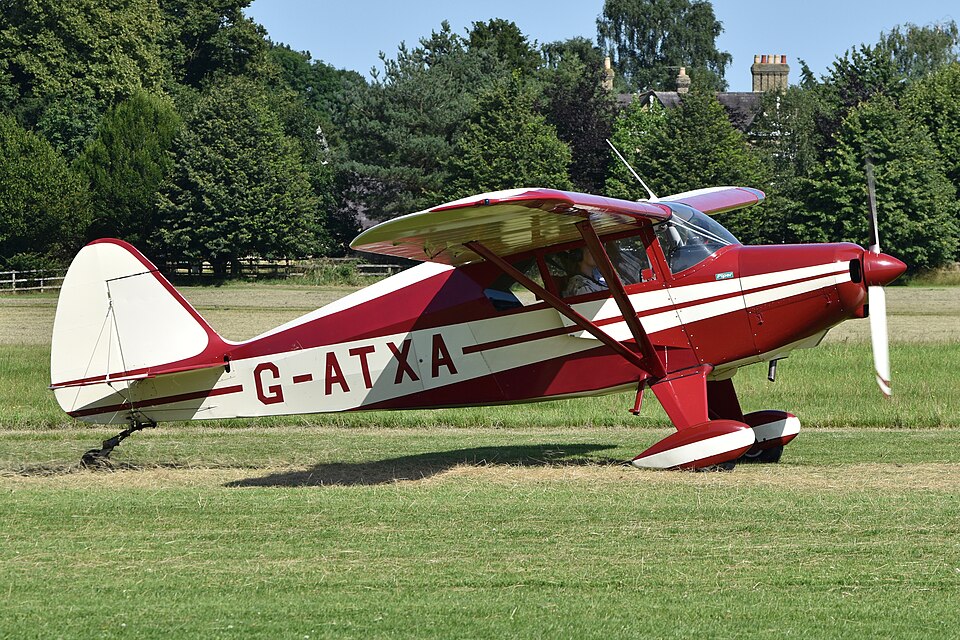
Aircraft and Pilot Information
The aircraft involved was a Piper PA-22-150, registration G-ATXA, manufactured in 1956. It was powered by a single Lycoming O-320-A2B piston engine. The pilot held a Private Pilot's Licence and was 39 years old. His total flying experience was 246 hours, including 37 hours on type. In the last 90 days he had flown 14 hours, with only 1 hour in the last 28 days.
Flight History
The pilot planned a local pleasure flight from a farm strip to maintain currency. Before departure, he obtained a meteorological forecast indicating fine weather with a surface wind of 290°/07 kt. The windsock at the strip showed a surface wind of 290°/310° at about 15 kt, and he elected to use Runway 33. The takeoff and subsequent flight were uneventful.
Accident Sequence
On return, the windsock indicated that Runway 33 was appropriate for landing. The pilot established the aircraft at about one mile on finals with 40° of flap. He experienced some turbulence below 800 feet but maintained a steady approach speed of 80 kt. Below 400 feet, the carburettor heat control was selected to cold. At that point, the pilot realized he was undershooting the runway. He applied full power, but the aircraft failed to climb because the flaps were still at 40°. The aircraft landed gently in a field of newly sown crop some 60 feet short of the runway threshold. The pilot closed the throttle, but as the aircraft rolled onto the runway, it struck a small earth bank at the boundary, causing the landing gear to collapse.
Pilot's Comments
The pilot attributed the cause of the accident to his failure to appreciate the strength of the wind, his failure to maintain the correct glide path, and failing to reduce the amount of flap during the attempted go-around. He also felt that his decision to aim for the threshold rather than a point further into the runway was a contributory factor.