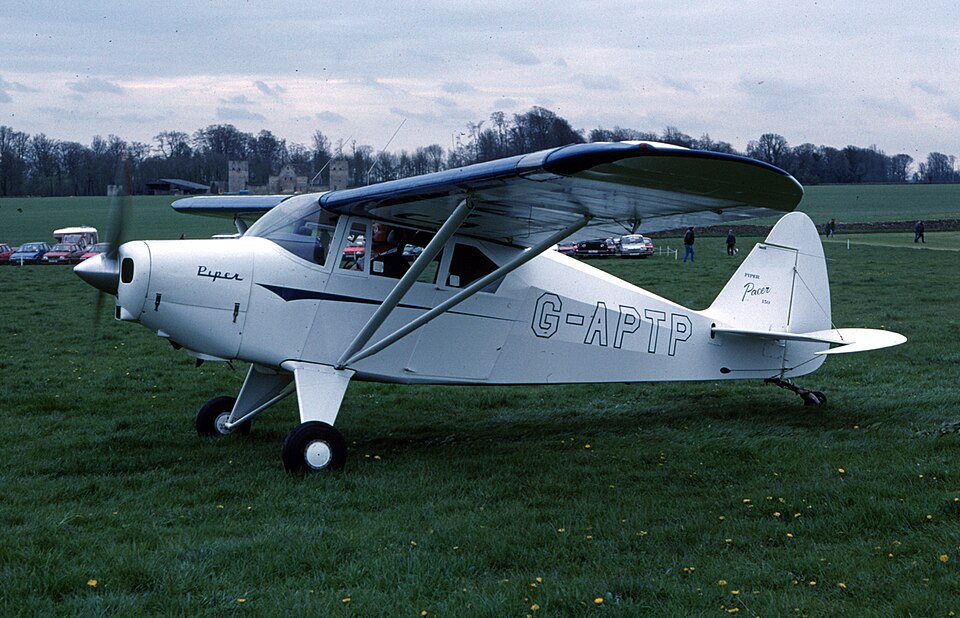
Aircraft and Flight Details
On 15 July 1999, a Piper PA-22-150 (modified), registration G-APTP, was involved in an accident at Roughay Farm, Hampshire. The aircraft, manufactured in 1957, was powered by a single Lycoming O-320-A2B piston engine. The private flight had one pilot and one passenger on board; neither sustained injuries.
Pilot Information
The 64-year-old pilot held a Private Pilot's Licence with a Night Rating and had accumulated 1,234 flying hours, of which 63 were on this type. In the preceding 90 days, he had flown 17 hours, with 11 hours in the last 28 days.
Sequence of Events
According to the pilot's report, the surface wind was 320° at 10 mph and the temperature was 25°C. He selected Runway 03 for departure. The take-off run proceeded normally up to 60 mph, after which the aircraft became airborne but then settled back onto the runway. It began to drift to the right, and the right wheel ran through a standing crop of peas along the runway edge. The aircraft continued into the crop and came to rest on its nose and right wing tip.
Damage
The accident caused damage to the propeller, engine cowling, and engine (shock loaded), as well as to the right wing and right wheel spat.
Pilot's Account
The pilot was wearing a lap and diagonal torso restraint and escaped without injury. He attributed the accident to a gust or change in wind direction at rotation, which he speculated was likely caused by thermal activity.