Introduction
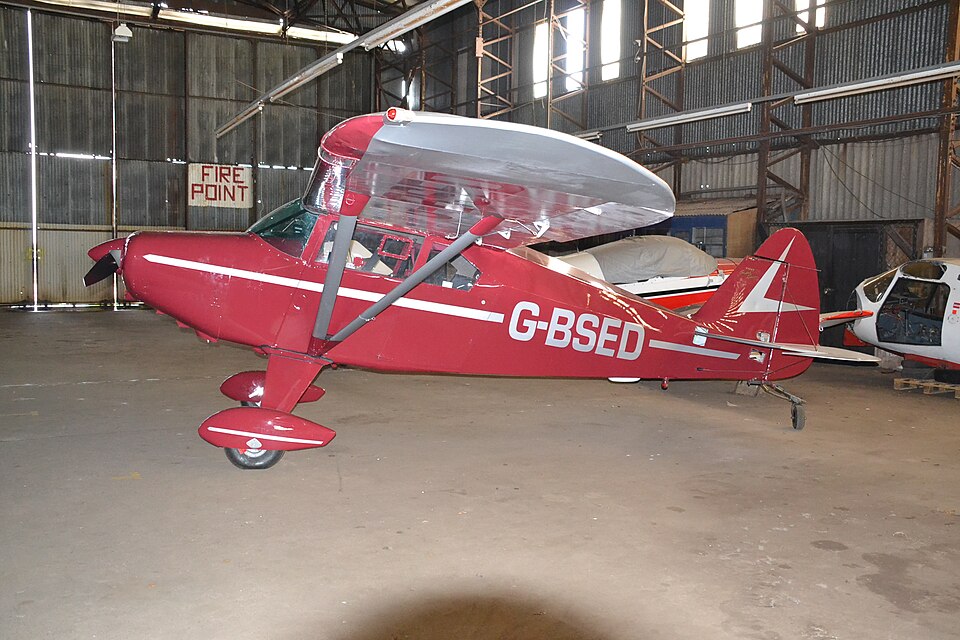
On 21 June 2002 at 1345 hours UTC, a Piper PA-22-160 (Modified) Tri-Pacer, registration G-BSED, was involved in an accident during takeoff from a private airstrip at Cheyne Farm, Stonehaven. The aircraft was operated on a private flight with one pilot and one passenger on board. Neither occupant was injured.
Sequence of Events
The aircraft, modified in the 1970s with a tailwheel, began its takeoff roll on a grass runway. The surface wind was predominantly down the runway at 10 to 13 knots but varied left and right. As the aircraft accelerated through approximately 50 mph, a gust of wind from the left caused it to veer left. Corrective control inputs were applied, but the aircraft began to oscillate right and left. The left main wheel departed the grass runway and entered long grass. Subsequently, the aircraft veered sharply left and continued into a wire fence. The left main wheel dropped into a furrow, causing the associated landing gear to collapse. As the gear collapsed, the aircraft slewed 80° to the right and came to a stop. The aircraft sustained extensive damage to the left wing, landing gear, elevator, propeller, engine, and cowling. The pilot and passenger vacated the aircraft unaided.
Aircraft and Pilot Information
The aircraft was a 1958 Piper PA-22-160 Tri-Pacer, modified with a tailwheel. It was powered by one Lycoming O-320-A1A piston engine. The pilot held a Private Pilot's Licence and was 45 years old. He had accumulated 498 total flying hours, of which 128 were on type. In the last 90 days he had flown 8 hours, and in the last 28 days, 3 hours. The aircraft was based at the airstrip and the pilot had flown from it approximately 100 times in the previous four years.
Runway and Environment
The pilot estimated the runway length as 510 metres and width as six to seven metres. The wire fence was approximately 13 metres from the runway centreline. Grass at the side of the runway was assessed as six to eight inches long, and the pilot noted that during June and July the grass is thicker than at other times of the year.
Guidance and Aftermath
Civil Aviation Publication (CAP) 428, 'Safety Standards at Unlicensed Aerodromes', provides guidance on physical standards for unlicensed aerodromes. It recommends that for runways less than 800 metres in length (short runways), the minimum width should be 18 metres, and the associated runway strip should be at least 60 metres wide (30 metres either side of the centreline). CAA General Aviation Safety Sense Leaflet Number 12C, 'Strip Sense', advises that on grass runways, grass length should be no more than 30% of the wheel diameter; longer grass can cause a large increase in wheel drag. The owner of the site increased the lateral dimensions of the runway and runway strip following the accident.