History of the Flight
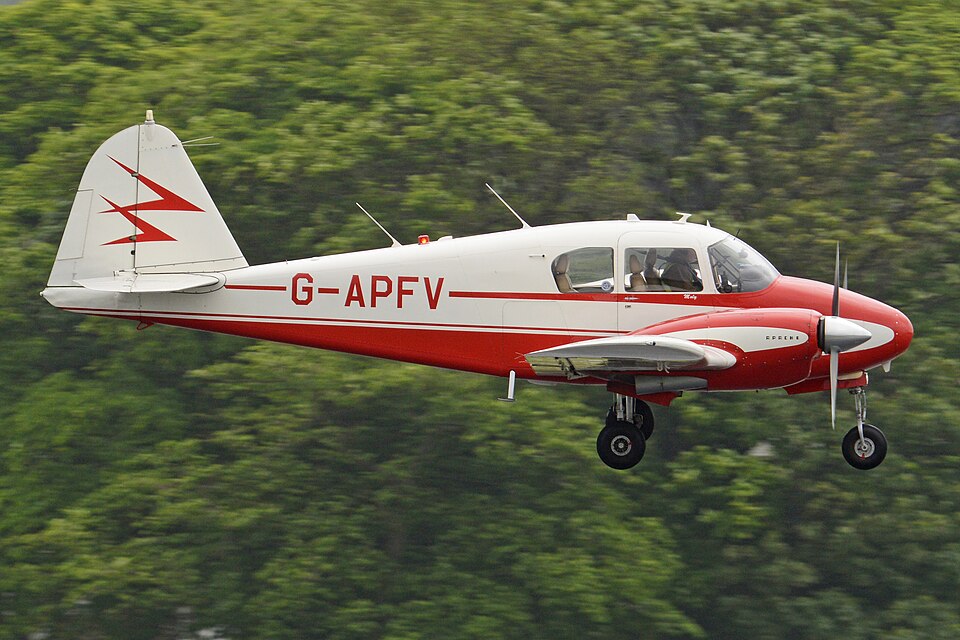
The aircraft, a Piper PA-23-160 registered G-APFV, departed Stavanger, Norway, under instrument flight rules for Longside Airfield. During descent, the aircraft entered cloud at 3,000 ft, becoming clear at 1,200 ft as it passed over Peterhead, from where the airfield was clearly visible. Local sunset was at 1647 hrs and the pilot described light conditions as approaching dusk. Weather conditions were consistent with reports from Aberdeen Airport, which at 1620 and 1650 hrs indicated wind from 130° at 20 kt gusting to 31 kt, visibility 4,000 m, and cloud scattered between 600 and 800 ft with a broken layer at 900 ft and overcast at 1,000 ft.
The pilot delayed extending flap and landing gear until joining the circuit. He recalled checking that the flaps were fully down before turning onto a right-hand base leg. The final approach to Runway 10 required high power to maintain the required approach angle. The landing gear warning horn sounded shortly before touchdown, and the propeller tips struck the runway before the pilot could take corrective action. The aircraft settled on its retracted landing gear, whose wheels protrude from their nacelles, and stopped approximately 230 m beyond the point of first propeller contact. The pilot turned off the fuel and electrical systems and vacated the aircraft without injury. He then reported the incident to Aberdeen ATC, confirming no injuries and that no assistance was required from emergency services.
Aerodrome Information
Longside Airfield has a single tarmac landing strip approximately 490 m long, forming part of a disused runway at the former RAF Peterhead. There are no ground facilities for instrument approaches, and all approaches must be made under visual flight rules.
Discussion
The pilot commented that because the speed at which he normally extended the landing gear was higher than for flap, having established that the flap was extended, he assumed that the landing gear was too. He listed as contributory factors his recollection of having selected the landing gear down and failure to confirm the landing gear position indicators on short final. It is possible that the meteorological conditions provided an additional distraction. This is an example of what is sometimes referred to as environmental capture, in which an operator has not consciously checked their performance of a habitual or frequently exercised skill.