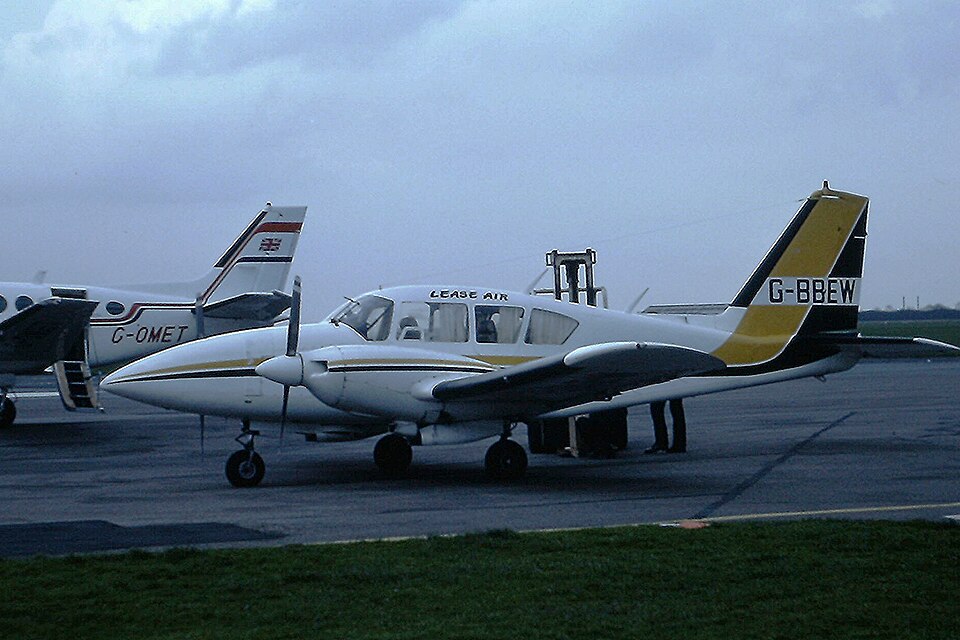
Flight Details
The aircraft, a Piper PA-23-250 registered G-BBEW, was manufactured in 1973 and powered by two Lycoming IO-540-C4B5 piston engines. The private flight departed White Waltham at 1130 hrs on 10 April 1999, bound for a private strip at Roughay Farm, Hampshire. The pilot held a Private Pilot's Licence with 645 hours total experience, including 53 hours on type, and had flown 10 hours in the previous 90 days and 7 hours in the previous 28 days. One passenger was on board.
Weather and Approach Planning
At 1100 hrs, the pilot checked the Southampton weather, which reported wind 230°/8 kt, visibility 10 km or more, no significant weather, and broken cloud at 1,200 ft. The flight to the intended area was uneventful. The pilot identified a landing site that matched the description of Roughay Farm, confirmed using a GPS with a four-figure grid reference, and conducted a dummy approach followed by a go-around.
Sequence of Events
During the downwind leg of a planned extended circuit, visibility dropped to 8 km in drizzle, and the pilot lost sight of the landing strip. After approximately five minutes, visibility improved to 15 km, and the pilot re-identified the landing site, advising Southampton ATC of the landing. A steeper-than-normal approach was made to clear power lines. The aircraft touched down at the intended point on the uphill portion of the runway. Upon cresting the rise, the pilot expected to see 400 metres of runway remaining but instead observed a fence crossing the strip 100 metres ahead. With an indicated airspeed of 50 kt, the pilot applied power; both engines responded normally. The nosewheel contacted the first and second fences, spaced about six feet apart. The pilot then saw a set of telephone cables further down the slope immediately ahead. Raising the nose caused the aircraft to stall; the port wing dropped and impacted the ground, slewing the aircraft anticlockwise through 270° under the telephone cables without contacting them. The undercarriage collapsed, and the aircraft sustained substantial damage, including to both wingtips, the tail fin, and propellers.
Post-Accident Actions
Emergency drills were completed, and there was no post-crash fire. Both occupants, uninjured, exited through the starboard door. The pilot informed Southampton ATC by mobile telephone, and emergency services arrived within 10 minutes.
Contributing Factors
The pilot had incorrectly identified Phoenix Farm strip for Roughay Farm; Roughay is approximately half a mile west of Phoenix Farm. The pilot was not aware of the adjacent strip and was unable to see the fences or wires during the dummy approach.