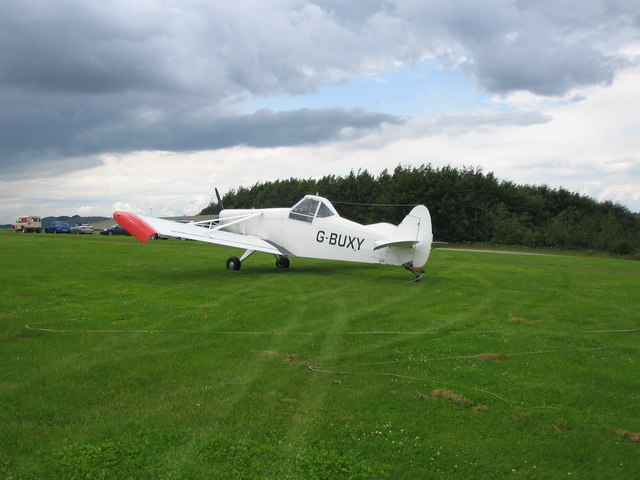
Aircraft Information
The aircraft involved was a Piper PA-25-235 Pawnee, registration G-BUXY, manufactured in 1963. It was powered by one Lycoming O-540-B2B5 piston engine. The pilot held a Private Pilot's Licence and was 55 years old, with a total flying experience of 243 hours, of which 79 were on type. In the previous 90 days, he had flown 8 hours, and in the last 28 days, 3 hours.
Flight Details
The flight was a private operation for glider towing. On 22 February 2003 at 1630 UTC, the aircraft had completed eleven glider towing flights that day without incident. The landing direction was approximately 060°, and the wind was reported as 130°/15 kt. No other persons were on board; the pilot was the sole occupant.
Incident Description
After a successful landing, the pilot began post-landing checks while taxiing at walking pace. These checks included setting the elevator trim fully nose up. He then initiated a left turn to backtrack toward the glider launching area. As the aircraft turned through approximately 100°, the tail, now facing into the wind, lifted. The pilot managed to close the throttle before the propeller struck the ground, resulting in a broken propeller. The pilot reported no injuries.
Pilot's Explanation
The pilot stated that he believed the accident was caused by turning into a quartering wind with the control stick well back, a consequence of having selected full nose-up trim during the post-landing checks. The report noted that good practice for tailwheel-configured aircraft is to hold the control stick neutral or forward when taxiing with a tailwind to prevent the tail from lifting.