History of the Flight
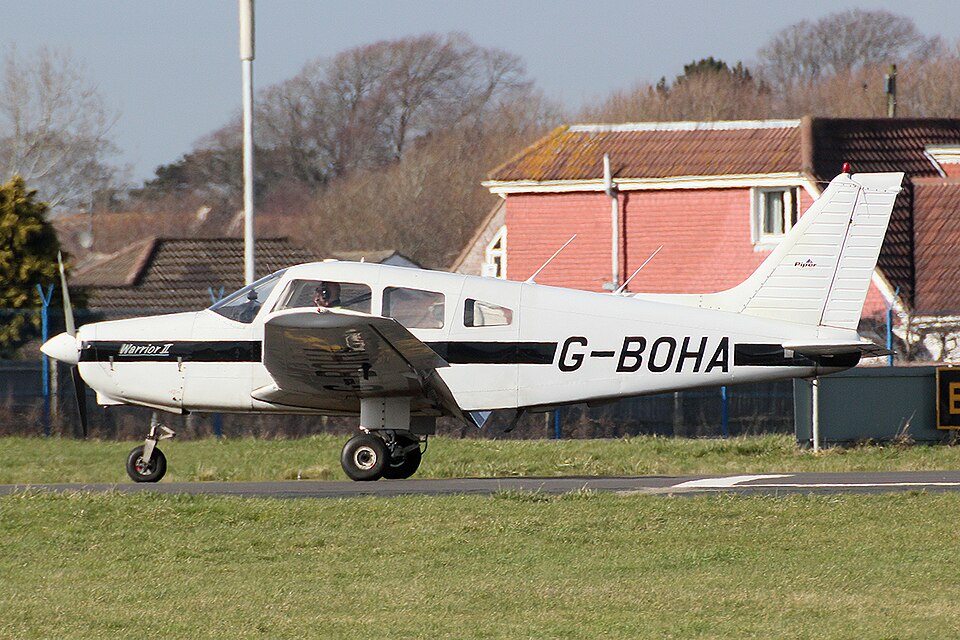
The student pilot, on his second solo flight, had been briefed by his instructor for a local exercise. The weather was generally fine with a light and variable wind. Runway 23, a hard surface of 1,309 m, was in use.
The initial part of the flight—a short navigation exercise—proceeded normally. Upon return to Lee-on-Solent, the surface wind had increased to 10 kt from 170°. The pilot flew a stable approach. On touchdown, the aircraft veered left into wind. The pilot corrected with right rudder pedal and stopped the deviation as the aircraft reached the runway edge, then initiated a successful go-around.
The pilot requested the surface wind again and was advised it was from between 150° and 170° at 10 kt. He flew another stable approach but again experienced a swing on touchdown. He applied full right rudder pedal but felt no effect. He again attempted a go-around, but applying full power aggravated the situation. He tried to correct with right rudder and reduced power, but the nose leg collapsed and the aircraft came to a stop.
Further Information
The duty Air/Ground radio operator witnessed the event, seeing the aircraft veer off the runway and continue about 80 m eastward. Ground witness marks indicated the nose gear failure occurred late in the sequence, and propeller damage suggested significant engine power was still applied.
The student pilot acknowledged that his inexperience was a probable factor in the accident but could not account for the aircraft’s failure to respond to his right rudder pedal application. The aircraft operator reported that a senior club member had flown the aircraft about two hours earlier without incident. A post-accident inspection found no defects which may have contributed to the accident.
Probable Cause
No official probable cause stated in the source.