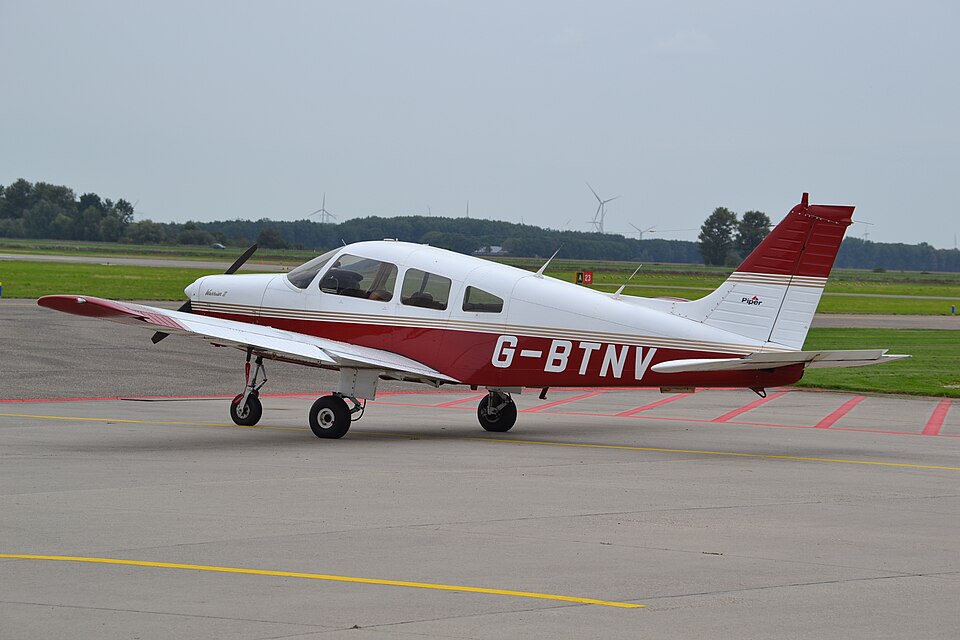
Incident Overview
On 11 December 2013 at 1437 UTC, a Piper PA-28-161 Cherokee Warrior II, registration G-BTNV, overran Runway 27L at Manchester Barton Airport during a private flight. The aircraft sustained damage to the propeller, nose landing gear leg, and left wing. The pilot and the sole passenger, a qualified pilot holding a Commercial Pilot's Licence, were uninjured.
Flight History
The pilot reported extending the downwind leg to avoid other circuit traffic. Upon turning onto the base leg, he lost sight of Runway 27L due to poor, hazy visibility. When he turned onto final approach and could see the runway again, he realised the aircraft was above the normal vertical approach path and not aligned with the runway centreline. He manoeuvred to regain the centreline and correct vertical profile, but as he passed the beginning of the runway, the airspeed was approximately 70 kt instead of the desired 60 kt.
The passenger mentioned executing a go-around, but the pilot considered a safe landing still possible. He flared the aircraft, which then floated just above the surface. With a calm wind, touchdown occurred approximately halfway along the runway. The pilot judged there was still sufficient runway to stop, but despite braking hard, the aircraft decelerated slowly—attributed by the pilot to damp grass. The aircraft overran the end of the runway onto soft ground, tipping forward and to the left, causing the propeller and left wing to contact the ground.
Pilot Experience and Reflections
The pilot, aged 70, held a National Private Pilot's Licence with a total of 220 hours flying experience, all on type. In the 90 days preceding the incident, he had flown 14 hours, with 7 hours in the last 28 days.
Upon reflection, the pilot considered that when he realised he was above the vertical profile and not on the runway centreline, he could have positioned the aircraft onto the dead side of the runway and rejoined the circuit.
Relevant Guidance
Civil Aviation Authority (CAA) Safety Sense Leaflet 7c, which addresses takeoff and landing performance of light aircraft, advises in paragraph 7: 'If you’ve misjudged [the landing], make an early decision to go around – don’t float half way along the runway before deciding.'