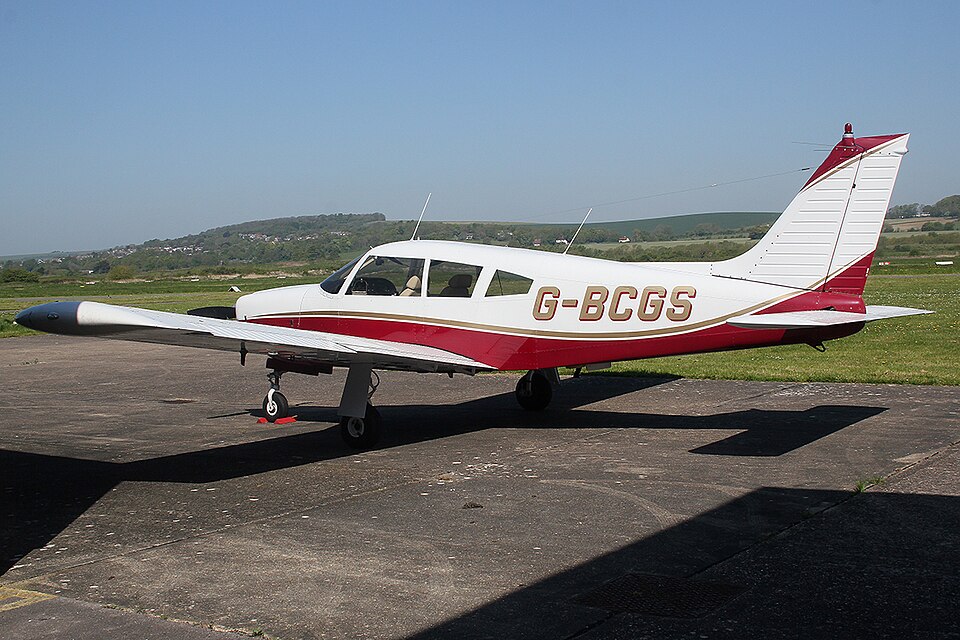
Aircraft and Flight Preparation
The aircraft involved was a Piper PA-28R-200-2 Arrow, registration G-BCGS, manufactured in 1972 and powered by a single Lycoming IO-360-C1C piston engine. The owner, whose Private Pilot's Licence had lapsed, arranged tuition with an experienced flying instructor familiar with the type to prepare for a renewal Skill Test. Both pilots briefed on the exercises, which included upper air work, circuits, and Practice Forced Landings (PFLs).
One week before the flight, the aircraft's landing gear automatic extension system had been removed per Piper Service Bulletin SB866A and replaced with a landing gear warning system. The warning system activates a horn and light when the throttle is closed or flaps extended beyond the first position without the landing gear locked down. Both pilots familiarized themselves with the new system.
Flight Events
The flight departed Little Gransden Airfield and commenced upper air exercises. During steep turns, slow flight, stalls, and PFLs, the landing gear warning horn sounded repeatedly for extended periods. The aircraft then returned for circuits and PFLs on Runway 10. During the final PFL, the wind favoured Runway 28, so the owner performed a go-around, raising the landing gear and flaps. While repositioning for a base leg to Runway 28, the instructor noticed horses in a field and took control to avoid overflying them.
The instructor handed control back and directed the owner to execute a flapless approach. The owner positioned the aircraft lower and closer than normal, using some power to maintain speed and angle. In the flare, he closed the throttle, and the aircraft settled onto the runway, sliding on its fuselage underside to a stop. Both occupants, wearing lap and diagonal harnesses, exited unharmed through the normal door. No fire occurred.
Comments
The owner stated he believed he did not select landing gear down because the approach lacked a downwind leg; distraction and high workload caused him to omit his customary 'Red, Blue, Green' check. He did not recall hearing the warning horn before touchdown but noted that prolonged horn activation during the flight had conditioned him to be 'immune' to it, and that the system provides little protection on a flapless approach.
The instructor reported that the flight was 'intense' and that the accident occurred during a period of high workload. He noted the owner performed well and may have relaxed as a result. He recalled hearing the warning horn just before touchdown when power was reduced, and commented that the landing gear indications are not visible from the right seat without deliberate head movement.