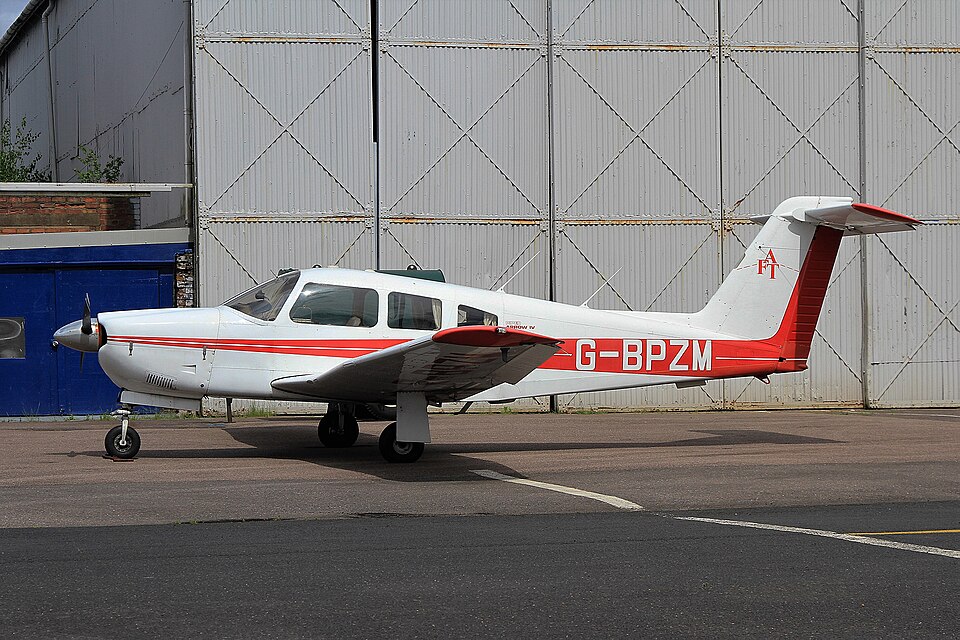
Aircraft and Flight Details
The aircraft involved was a Piper PA-28RT-201 Arrow, registration G-BPZM, powered by a single Lycoming IO-360-C1C6 piston engine and manufactured in 1979. On 18 September 2000 at 1342 UTC, the aircraft was conducting a training flight at Exeter Airport with two crew (an instructor and a student pilot) and no passengers. No injuries were reported. The damage was superficial to the underside of the fuselage, and the propeller was badly damaged.
The commander held an Airline Transport Pilot's Licence with an Instructor Rating, was 68 years old, and had accumulated 20,000 flying hours, including 508 hours on type. In the last 90 days, he had flown 40 hours, and in the last 28 days, 5 hours.
Weather and Circuit Operations
The weather conditions were: surface wind 220° at 3 knots, visibility 10 km, no significant weather, few clouds at 600 feet, scattered clouds at 3,000 feet, temperature +16°C, dew point +10°C.
The aircraft had returned to the circuit after a local training sortie. The instructor and student were performing a series of touch-and-go landings on Runway 26, and three had been completed to a high standard. On the fourth circuit, another aircraft was cleared to enter and backtrack the runway. To accommodate this traffic, the crew decided to extend the downwind leg and carry out a flapless approach for a touch-and-go once the preceding aircraft cleared the runway.
Sequence of Events
On turning finals, the other aircraft was cleared for takeoff. The instructor informed ATC that they would continue for a go-around, which was approved. The departing aircraft became airborne, and the instructor on late finals requested and was cleared for a touch-and-go. The aircraft made a normal flare but settled onto the runway with the landing gear retracted and skidded to a halt. The aircraft accident procedures were initiated, and the airport Rescue and Fire Fighting Service attended immediately. The emergency shutdown drills were completed, and both pilots departed the aircraft through the normal exit.
Operator Procedures and Contributory Factors
The training organisation had recently acquired the Piper Arrow to complement its existing Beechcraft Duchess and Piper Warrior aircraft. In an effort to harmonise operations, the lowering of the Arrow's landing gear was left until the base leg, which was where the Duchess landing gear was normally selected. For training purposes, many Duchess landings were made under asymmetric power, so the landing gear was not lowered until a landing on the runway was assured, as determined on the base leg. The operator has since revised the procedures, requiring the landing gear to be lowered at the beginning of the downwind leg.
The instructor concluded that there were two main contributory factors leading to the accident: he had allowed himself to become distracted by the other traffic and had developed a feeling of confidence in his student, who had demonstrated a high level of competence and had been performing the checks well.