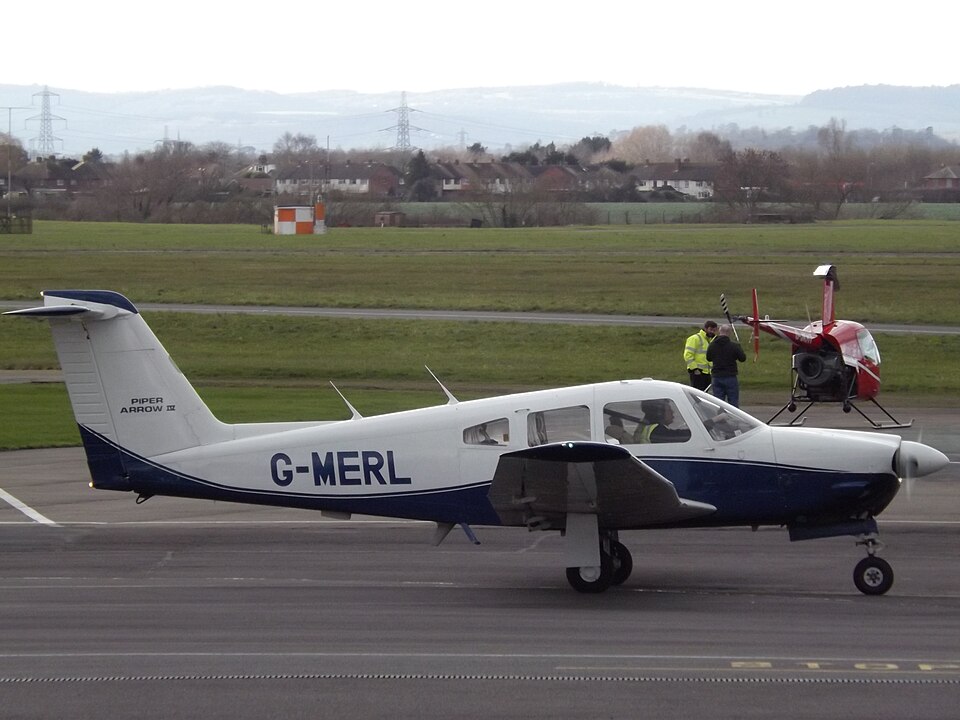
Accident Overview
On 10 April 2006 at 1725 UTC, a Piper PA-28RT-201, registration G-MERL, suffered a collapse of the nose landing gear during landing at Cardiff Airport. The aircraft was on a private flight returning from Bristol Filton. The pilot and passenger were uninjured. Damage was limited to a bent propeller, scraped engine cowling, and abraded nose landing gear doors.
Aircraft Details
The aircraft, manufactured in 1979, was equipped with a Lycoming IO-360-C1C6 piston engine and a tricycle retractable landing gear operated by an electrically driven hydraulic pump. In flight, hydraulic pressure held the gear retracted. A backup gear extender automatically lowered the gear when airspeed dropped below 95 kt with engine power at idle. The landing gear warning horn emitted a 90 Hz beeping sound, distinct from the continuous stall warner.
Sequence of Events
The pilot, holding a Private Pilot's Licence with 1,625 hours total (1,230 on type), flew an uneventful trip to Bristol Filton. On return, she was instructed to orbit before joining the circuit on base leg. The approach to Runway 30 was flown at 75-80 kt with 25° flap. During the flare, the pilot heard a beeping noise she thought was the stall warner. After a normal touchdown on the main wheels, the nose sank onto the runway. The pilot secured the aircraft and vacated with the passenger via the normal exit. Airport fire services raised the nose and pulled the landing gear into the extended position; the pilot later noted the gear lever was down.
Damage and Examination
Post-accident inspection found a bent propeller blade, abrasion to the engine cowling and nose gear door. The engineer assessed the damage as consistent with a gentle lowering of the nose onto the runway. Tests of the undercarriage operating and warning systems revealed no faults or obvious reason for the collapse.
Comments from Source
It appeared the pilot misinterpreted the undercarriage warning horn as the stall warner and consequently landed with the nose landing gear in an unsafe condition. Possible scenarios included the selector left in the UP position (where the backup system might not activate until throttle retarded during flare, insufficient time for nose gear to lock) or the selector moved to DOWN but the nose leg failed to engage the downlock. In either case, at least one green landing gear light would not have illuminated. The pilot, normally conscientious, believed she likely did not observe three green lights before landing.