Incident Overview
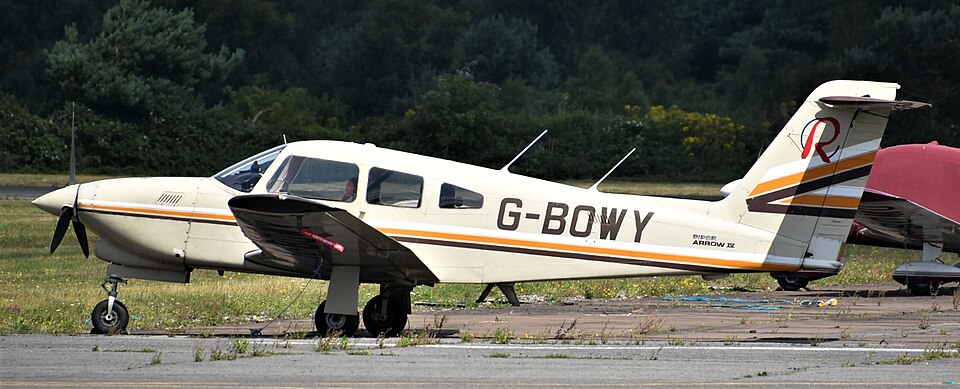
On 25 May 2002, a Piper PA-28RT-201T (registration G-BOWY) operated by a flying club was conducting a training flight at Redhill Aerodrome, Surrey. The aircraft was flown by an instructor and a student pilot (a PPL holder), with a passenger on board for air experience.
Pre-Flight and Takeoff
The instructor performed a pre-flight inspection and taxied the aircraft to a grass area for refuelling. After a briefing, the student completed a further pre-flight inspection. The landing gear was retracted normally after takeoff.
Landing Gear Malfunction
On final approach for the first circuit, the gear was selected down. Green 'down and locked' indications illuminated for the nose and left main landing gear, but a red 'gear unsafe' indication remained for the right main landing gear. The instructor observed the ammeter to confirm the electric hydraulic pump was operating. A low approach and go-around was performed, and ATC personnel confirmed the right main gear was partially extended.
Troubleshooting and Decision
The instructor continued the flight in the local area for two hours, cycling the landing gear approximately 30 times and performing the emergency gear extension procedure, which involved high 'g' and yawing manoeuvres. The red 'gear unsafe' indication persisted. The chief engineer from the maintenance organisation took off in another aircraft to conduct an airborne inspection of the right gear. Based on this, the instructor decided to land at Redhill on Runway 26L with the nose and left main gear extended. Several circuits were flown to assess the wind, which was south-westerly at 20–34 kt.
Landing and Damage
The final approach was flown higher than normal to allow idle power and full flap later. Shortly after the left main gear touched down, the right wing tip contacted the ground. The pilot maintained directional control with gentle braking and left rudder. As the aircraft slowed, it turned right and came to rest on the right side of the runway. All three occupants vacated without difficulty. Damage was limited to distortion of the outboard tip of the right flap.
Examination Findings
Subsequent examination by the club's maintenance organisation revealed that the torque link bolt, its associated castellated nut, and split pin retainer on the right main landing gear leg's torque link scissor assembly were missing. This allowed the right wheel to swivel approximately 30°, jamming the leg inside the wheel well. The corresponding bolt on the left leg showed no abnormal wear.
Previous Incident and Maintenance
The aircraft had a similar incident on 8 June 2000 during taxi when the right main wheel skewed approximately 70° due to a missing torque link bolt. Following that event, the maintenance organisation replaced these bolts during the annual inspection; the most recent annual inspection was in August 2001. Neither the instructor nor the student recalled conclusively seeing the bolt during their pre-flight inspections. If the bolt had been missing before takeoff, the wheel would likely have skewed during taxi.