History of the Flight
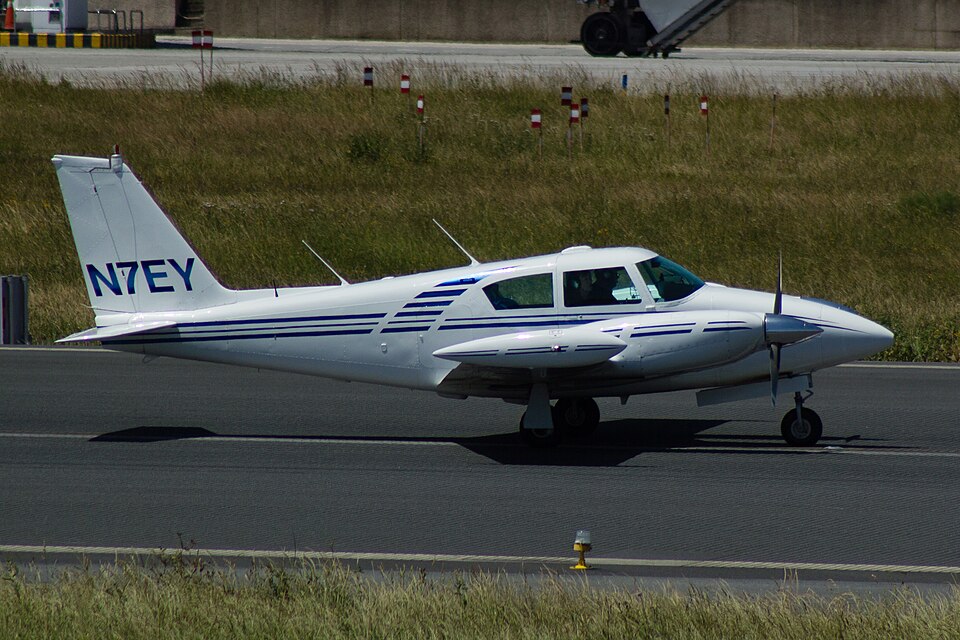
The aircraft, a 1964 Piper PA-30 Twin Comanche registration N7EY, had been positioned at Farley Farm Airstrip, Braishfield, Hampshire, for maintenance and modifications. After the work was completed, the pilot intended to fly the aircraft back to its base at White Waltham. Weather conditions at the time of the accident, 1345 UTC on 23 November 2007, were good visibility with a light north-easterly wind. The grass runway was reportedly damp.
Pre-Takeoff Checks and Takeoff
The pilot performed pre-flight checks and noted nothing abnormal. During taxi, the rudder and brakes functioned satisfactorily. While performing pre-takeoff checks, the aircraft moved forward slightly, so the pilot reapplied the brakes. He selected Runway 24 for takeoff because the wind was light and Runway 06 had an upslope. With a slight tailwind, he brought the engines up to full power before releasing the brakes. Approximately 40 metres into the takeoff roll, the aircraft suddenly veered to the right, departed the prepared grass runway, and entered a field.
Damage and Aftermath
Traveling over rough ground caused the left main landing gear to detach and resulted in damage to the left wing and propeller. The pilot shut down the aircraft before exiting normally and was uninjured. Examination of the tyre tracks in the grass led the pilot to conclude that the mainwheels had locked up during the takeoff roll, possibly because the brakes were not fully released. In hindsight, he considered it would have been prudent to check that the brakes were fully off by allowing the aircraft to roll forward a short distance before commencing the takeoff roll.
Aircraft Information
The aircraft was a Piper PA-30 Twin Comanche, serial number unknown, equipped with two Lycoming IO-320-B1A piston engines. The pilot held a Private Pilot's Licence, was 50 years old, and had 524 total flying hours, with 65 hours on type. The pilot's flying experience in the last 90 days was 31 hours, and in the last 28 days, 0.5 hour.