Background
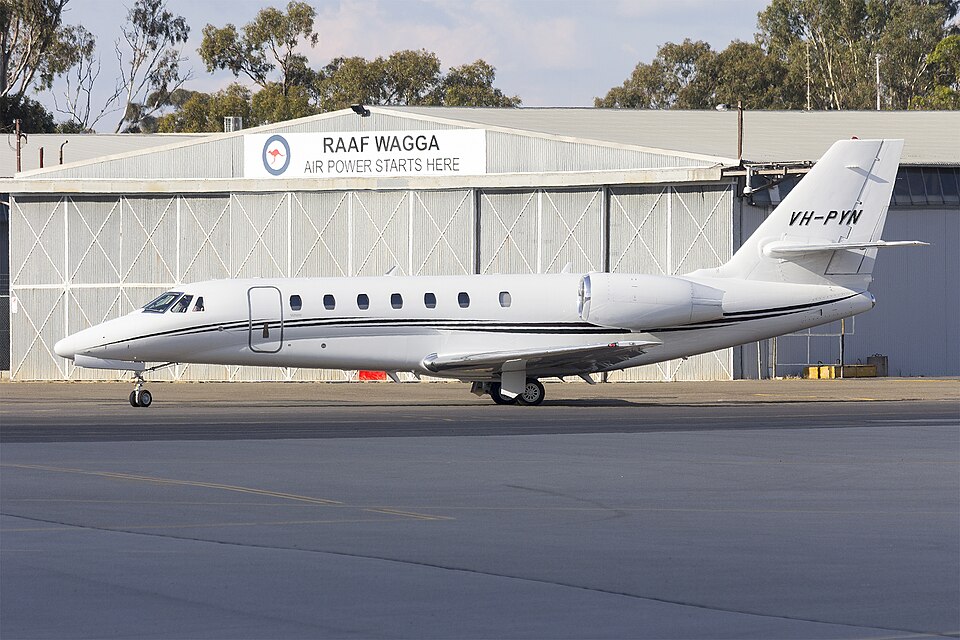
On 2 December 2005, at 1122 Eastern Daylight-saving Time, a Piper Aircraft Corporation PA-31-350 Chieftain aircraft, registered VH-PYN (PYN), departed Archerfield, Queensland, on a private flight to Griffith, New South Wales. The flight was planned under instrument flight rules (IFR). On board were the pilot, two passengers, and an observer-pilot who was flying to gain knowledge of the aircraft's operation.
Flight Sequence
The aircraft tracked direct to Moree and then Coonamble at 10,000 ft, in accordance with the flight plan. At 1303, the pilot amended the destination to Swan Hill, Victoria, tracking via Hillston, NSW. At 1314, the pilot advised air traffic control (ATC) that the aircraft had passed overhead Coonamble at 1312 maintaining 10,000 ft, and was estimating Hillston at 1418. At 1316, the pilot reported tracking 5 NM (9 km) left of track due to weather. At 1337, he advised diverting up to 20 NM (37 km) left of track due to weather. At 1348, he reported diverting 29 NM (54 km) left of track, again due to weather. No further radio transmissions were heard from the pilot.
Accident and Findings
At about 1400, police received a report that an aircraft had crashed on a property approximately 28 km north of Condobolin, NSW. The extensively burned wreckage was subsequently confirmed as VH-PYN. Other wreckage, spread along a trail up to 4 km from the main wreckage, was located the following day. Examination of ATC recorded radar data indicated that the aircraft entered radar coverage about 50 km north of Condobolin at 1346:34. The last valid radar data from the secondary surveillance radar on Mount Bobbara was at 1349:53. During that 3 minute 19 second period, the recorded aircraft track was approximately 56 km left of the Coonamble-to-Hillston track and showed a change in direction from southerly to south-westerly. The aircraft's groundspeed ranged between 200 and 220 kts, and altitude remained steady at 10,000 ft. The last recorded radar position was approaching the limit of predicted radar coverage and within 10 km of the main wreckage location.
Earlier that day, the aircraft had departed Bendigo, Victoria, at 0602 and arrived at Archerfield at 1034 with the pilot and observer-pilot on board. The aircraft was refuelled to full tanks with 314 litres of aviation gasoline at Archerfield. The refuelling agent reported that the main and auxiliary tanks were full at completion, and that the pilots had commented that the forecast for their return flight indicated weather conditions would be 'patchy'.
Probable Cause
The official investigation found the following contributing factors: a line of thunderstorms crossed the aircraft's intended track; the aircraft was operating in the vicinity of thunderstorm cells; and, in circumstances that could not be determined, the aircraft's load limits were exceeded, causing structural failure of the airframe. Other safety factors identified included ATC procedures not requiring SIGMET information to be passed to the aircraft, shortcomings in Airservices Australia's Hazard Alert procedures and guidelines for assessing SIGMET information, and inconsistencies between ATC procedures for disseminating SIGMET information and those in ICAO documents. Additionally, the aircraft was not equipped with weather radar or lightning strike detection systems, and the pilot did not request additional weather information from ATC. The pilot was occupying the right cockpit seat and the observer-pilot the left seat at the time of breakup, but that arrangement was not considered to have influenced the accident.