Introduction
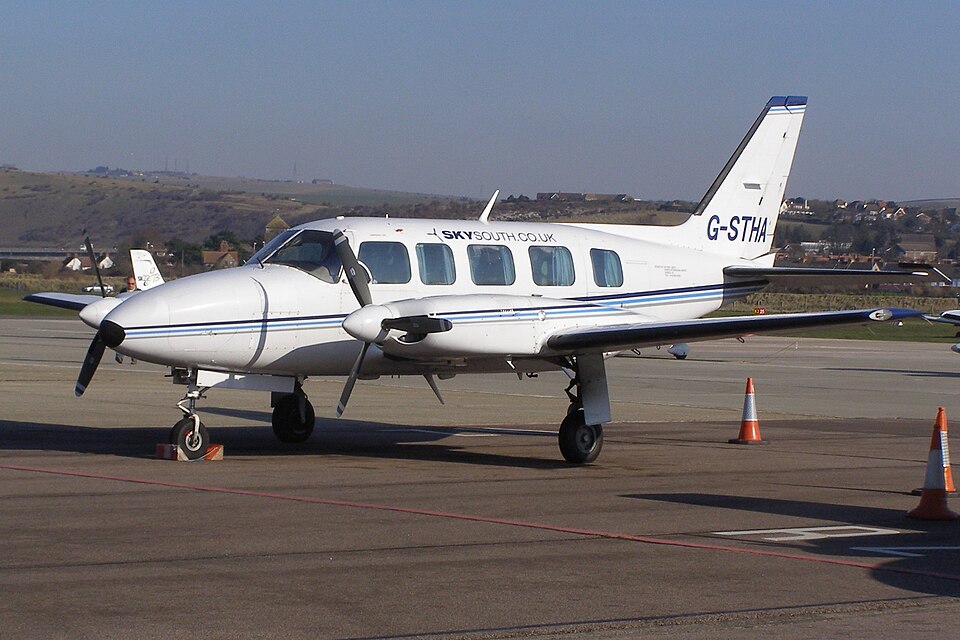
On 19 November 2013 at 0645 UTC, a Piper PA-31-350 Navajo Chieftan, registration G-STHA, experienced a mechanical failure of its left engine while in cruise at FL80 near Luton Airport. The aircraft was operating a commercial air transport cargo flight from Southend Airport to Oxford Airport with two crew members and no passengers.
History of the Flight
During the cruise, the crew felt a large 'thump' and the aircraft yawed to the left, beginning to lose altitude. They identified the left engine had failed and observed that its top cowling had buckled upward. After shutting down the engine and feathering the propeller, the crew declared a MAYDAY with London Radar. Unable to maintain altitude and reporting difficulty with directional control, they were transferred to Luton Radar and received vectors for Runway 26 at Luton Airport, where they landed without further incident.
Aircraft Examination
A preliminary examination revealed that the No.2 piston and cylinder assembly on the left engine had detached from the crankcase but remained attached to the aircraft by the spark plug ignition leads. The cowlings were disrupted and pushed apart.
Engine Examination
The operator removed the engine and conducted a limited inspection. The failure of the No.2 piston and cylinder assembly had initiated internally, and the engine had continued to operate for a period before the cylinder detached. There were indications that the cylinder had been operating at a higher than normal temperature. The No.3 cylinder was removed, and its piston showed distress marks consistent with an engine that had been unused for long periods, allowing oil to drain from the cylinder surface.
Engine History
The left engine had been overhauled in February 2011 and refitted in March 2011. The aircraft was stored at Lydd Airport from 12 October 2012 to 28 January 2013, with an annual inspection at the end of that period. It was removed from service for a maintenance check between 31 July 2013 and 8 October 2013, which included cylinder compression checks and oil filter inspections. All engine flexible hoses were replaced at that time. The aircraft flew 80 hours in 2011, 52 in 2012, and 92 in 2013.
Discussion
The detachment of the No.2 cylinder disrupted the engine cowlings, causing increased drag that prevented the aircraft from maintaining altitude. The crew managed to maintain control and execute a safe landing. At the time of writing, a detailed engine examination had not been conducted, so no firm conclusions could be drawn regarding the cause of the failure. The aircraft had low utilisation and extended parking periods, with internal distress marks possibly attributable to sporadic use.