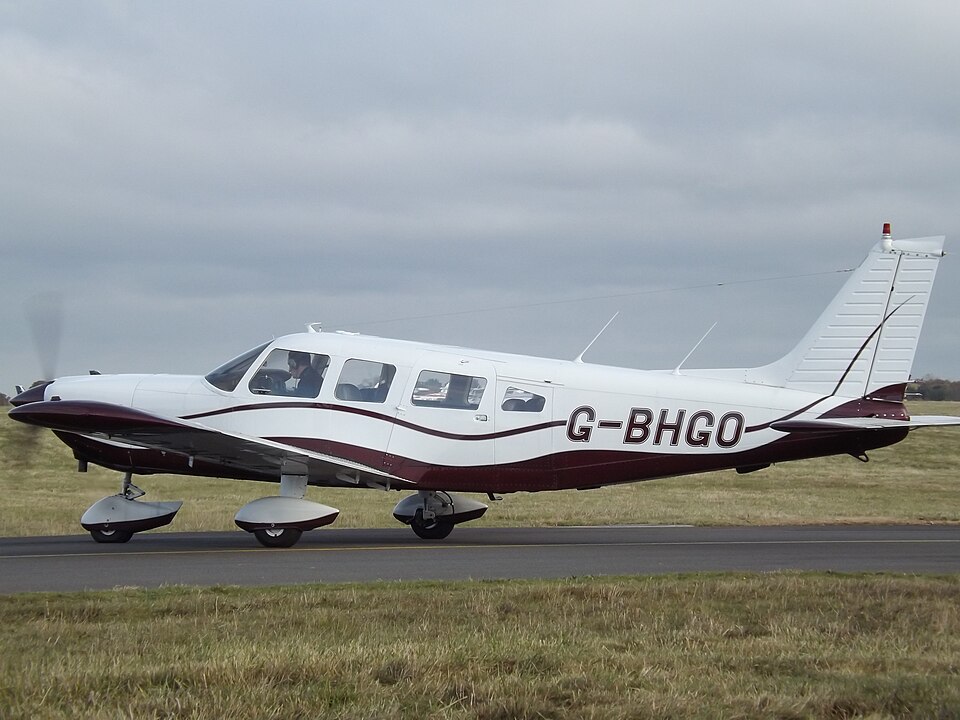
History of the Flight
On 11 December 2005, the pilot of a Piper PA-32-260 Cherokee Six (registration G-BHGO) took four passengers on a private scenic flight from Eshott Airfield, Northumberland, to Newcastle Airport and then back to Eshott. The front-right passenger had never flown in a light aircraft before and was nervous about flying. The pilot stated he briefed the passenger not to touch the controls, but the passenger did not recall such a briefing. During the flight to Newcastle, the pilot noted turbulence caused by strong wind. After landing, the group had coffee at Newcastle Airport before returning to Eshott.
Landing and Accident
On the return approach to Eshott's Runway 26, the pilot used three stages of flap and an approach speed of 85–90 KIAS. He estimated the wind from 240° gusting to 15 knots. The pilot reported that the front-seat passenger was chatting during the approach, prompting him to ask for quiet, although the passenger believed the pilot was distracted by difficulty locating the airfield. The touchdown on the paved runway appeared normal to both the pilot and passenger. The aircraft tracked straight for approximately 35 meters before suddenly veering left. The pilot initially thought a tire had burst and decided against a go-around. He applied full right rudder pedal and then brakes, but could not regain control. The aircraft skidded off the runway edge, struck a soil embankment about 2 feet high, and then hit three solid wooden fence posts in quick succession before coming to rest. The pilot began shutdown checks as he realized they would hit the fence. The front-seat passenger heard a "bang, bang, bang" as the aircraft hit the posts. He also recalled moving forward relative to the aircraft as it stopped.
Aftermath and Examination
After the aircraft came to rest, the pilot and front-seat passenger exited via the forward door; the other passengers used the rear door. Airfield assistance arrived within five minutes. The cabin remained largely intact, but the front-seat passenger sustained a serious spinal injury requiring hospitalization; one other passenger suffered minor injuries. The crew reported no injuries. The aircraft's owner, who witnessed the landing, noted it appeared normal until the aircraft disappeared behind a hangar. He received a call from the pilot shortly after and initially thought it was a joke. The aircraft was not examined by the AAIB, but photographs showed damage to the left wing leading edge, left horizontal stabilizer, propeller blades (bent back consistent with low power), and a slightly bent nose landing gear leg. The nose wheel steered freely when rudder pedals were applied.
Analysis
The cause of the loss of control could not be positively established. According to both the pilot and front-seat passenger, the atmosphere during the final approach was tense, which would have contributed to the pilot’s mental workload and could have contributed to the loss of control after landing, especially in gusty wind conditions. The gusty wind, the pilot’s distraction during the approach, or an accidental control input were cited as possible contributory factors.